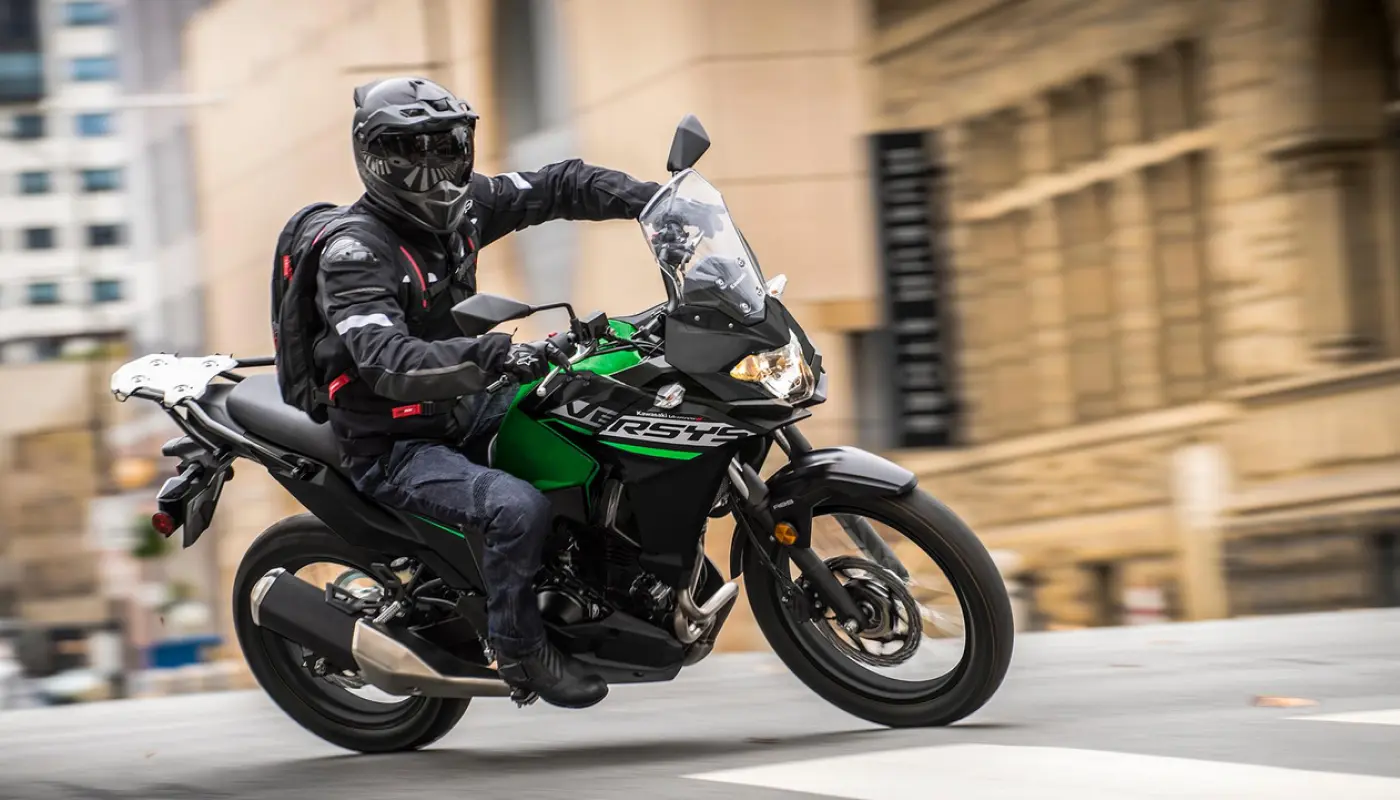
The Kawasaki Versys-X 300 is a motorcycle that deserves your attention. Since its 2017 debut, it has showcased solid performance. In this review, we’ll explore real-world riding impressions, off-road capabilities, and touring practicality, comparing it to rivals like the Royal Enfield Himalayan 450 and Yamaha Ténéré 700. Ultimately, the 2026 Kawasaki Versys-X 300 remains a smart buy in today’s fast-paced market. Spoiler: it definitely is.
The Perfectly Sized ADV Bike: Kawasaki Versys-X 300
The heart of the Versys-X 300 is a 296cc parallel twin borrowed directly from the Kawasaki Ninja 300 and that lineage matters. What sets the Versys-X 300 apart from other bikes in the small ADV class is its smooth-running twin cylinder motor, which is counterbalanced to keep its 62mm pistons humming along in perfect harmony. On the highway, the Versys-X 300 can cruise comfortably at 75–80 mph with hardly a hint of vibration. At 75 mph the tachometer reads around 9,000 rpm, which may seem high revving, but the wind drowns out most of the engine noise at that speed and there isn’t more than a tingle in the bars. That range figure is one of the Versys-X 300‘s most underrated selling points for adventure touring.
Kawasaki Versys-X 300 — Full Specifications
| SPECIFICATION | DETAIL |
|---|---|
| Engine | 296cc Liquid-Cooled, DOHC, 8-Valve Parallel Twin |
| Peak Power | 39 hp @ 11,500 rpm |
| Peak Torque | 19 lb-ft (26 Nm) @ 10,000 rpm |
| Compression Ratio | 10.6:1 |
| Transmission | 6-Speed with Assist & Slipper Clutch |
| Suspension (Front) | 41mm Telescopic Fork — 130mm Travel |
| Suspension (Rear) | Uni-Trak Monoshock — 130mm Travel |
| Brakes (Front) | 290mm Petal Disc, Dual-Piston Caliper |
| Brakes (Rear) | 220mm Petal Disc, Single-Piston Caliper |
| Wheels (Front / Rear) | 19-inch / 17-inch Wire-Spoked |
| Ground Clearance | 180mm (7.1 in) |
| Seat Height | 815mm (32.1 in) |
| Fuel Capacity | 17L (4.5 US gal) |
| Curb Weight | 175 kg (386 lb) |
| Display | Analogue tachometer + LCD multi-function screen |
| ABS | Dual-channel (standard on ABS variant) |
| Positive Neutral Finder | Yes — Kawasaki exclusive feature |
| Starting MSRP | $5,699 USD |
Chassis, Suspension, and Handling
The Versys-X 300 rides on a rigid frame developed specifically for this model — not shared directly with the Ninja 300. The frame uses the rigidly-mounted engine as a stressed member for added stiffness and weight reduction, and was kept slim beneath the seat to help reduce the rider’s reach to the ground. That design philosophy pays dividends for shorter riders: the 815mm seat height is genuinely low for an adventure-style motorcycle, and the tapered seat shape means even riders at 5’3″ can get a foot down with confidence.
Suspension: Honest About Its Limits
The long-travel 41mm front fork increases capability on rough paved roads, and in practice the 130mm of travel front and rear handles broken tarmac, gravel roads, and moderate dirt tracks with reasonable composure. However, it is worth being straightforward here: 130mm is not the 200mm-travel setup you find on more serious off-road ADV bikes.
Handling Character
The 19-inch front and 17-inch rear wire-spoked wheel combination gives the Versys-X 300 a light, flickable handling character that suits urban riding and twisty backroads equally well.
Comfort and Ergonomics
The upright riding position is one of the Versys-X 300’s most consistent talking points among long-term owners. Comfortable ergonomics accommodate a variety of riders for both solo and two-up riding, and a relaxed, upright riding position provides easy on and off, comfortable in stop-and-go city traffic and on backroads and highways alike.
Wind Protection
The front cowling and tall windscreen provide excellent wind and weather protection for riders of average height. Taller riders — particularly those above 6 feet — may encounter some turbulence around the helmet at highway speed and might benefit from an aftermarket screen or clip-on deflectors, which are inexpensive and widely available.
Two-Up and Luggage
The rear seat and pegs are usable for a passenger, but this is still a 300cc machine. Around town and on backroads, it handles a rider, passenger, and light luggage without drama. Ask it to do full-speed motorway passes two-up with bags and you’ll start to feel the limits quite quickly. A standard luggage rack is included at the rear.
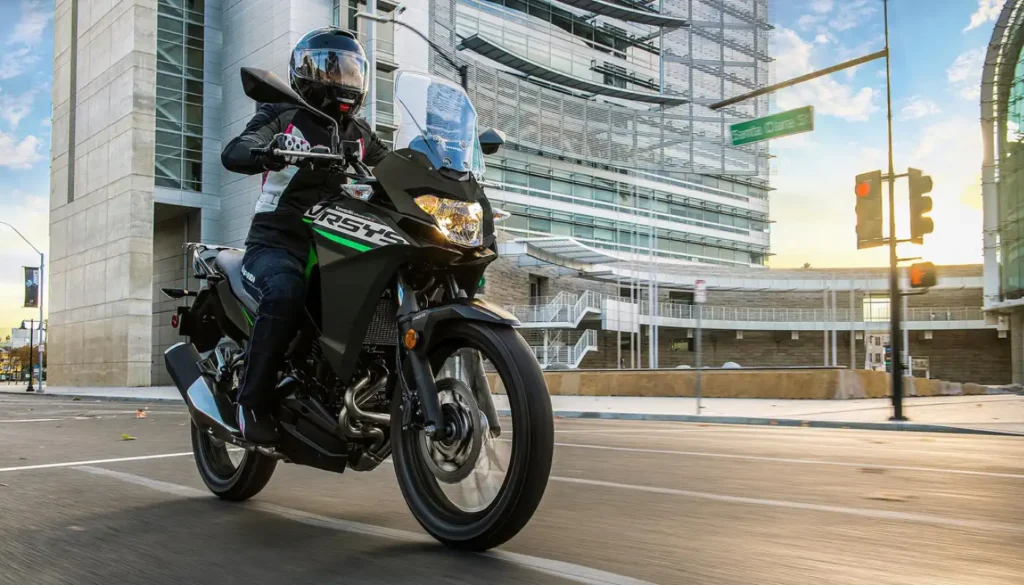
The Kawasaki Versys-X 300 is not trying to be a Ténéré 700, and it doesn’t pretend to be. The technology suite is simple by modern standards, but the ride is far more rewarding than the spec sheet suggests.
Strengths
- Smooth, vibration-free twin-cylinder character
- 250+ mile range from 4.5-gallon tank
- Low 815mm seat height — accessible to most riders
- 175 kg — genuinely lightweight and manageable
- Excellent altitude performance up to 10,000 ft
- Ultra-light clutch pull — ideal for city riding
- Positive Neutral Finder — small but brilliant feature
- Competitive pricing at $5,699
Limitations
- High-revving nature can feel busy on long motorway stints
- 130mm suspension limits serious off-road capability
- Non-switchable rear ABS for off-road use
- No ride modes, TFT, or navigation
- Halogen headlamp — LED upgrade recommended
- Windscreen is fixed — taller riders may want an upgrade
- Two-up performance drops sharply at motorway speeds
Head-to-Head Comparison: Versys-X 300 vs. Himalayan 450 vs. Ténéré 700
| SPECIFICATION | KAWASAKI VERSYS-X 300 | ROYAL ENFIELD HIMALAYAN 450 | YAMAHA TÉNÉRÉ 700 |
|---|---|---|---|
| ENGINE TYPE | 296cc Liquid-Cooled DOHC Parallel Twin | 452cc Liquid-Cooled DOHC Single | 689cc Liquid-Cooled CP2 Parallel Twin |
| PEAK POWER | 39 hp @ 11,500 rpm | 40 hp @ 8,000 rpm | 73 hp @ 9,000 rpm |
| PEAK TORQUE | ~19 lb-ft @ 10,000 rpm | 29.5 lb-ft @ 5,500 rpm | 50 lb-ft @ 6,500 rpm |
| CURB WEIGHT | 175 kg (386 lb) ★ Lightest | 196 kg (432 lb) | 204 kg (450 lb) |
| SUSPENSION TRAVEL (F/R) | 130mm / 130mm | 200mm / 200mm | 210mm / 200mm |
| GROUND CLEARANCE | 180mm (7.1 in) | 230mm (9.1 in) | 240mm (9.4 in) |
| SEAT HEIGHT | 815mm ★ Lowest | 825–845mm (adjustable) | 880mm |
| FRONT WHEEL | 19-inch spoked | 21-inch spoked | 21-inch spoked |
| FUEL CAPACITY | 17L (4.5 gal) | 17L (4.5 gal) | 16L (4.2 gal) |
| FUEL ECONOMY (EST.) | 57–63 mpg ★ Best | 45–65 mpg | 45–55 mpg |
| SWITCHABLE REAR ABS | No | Yes | Yes |
| RIDE MODES | No | Yes (2 modes) | Yes (2025+) |
| TFT / COLOR DISPLAY | No (Analogue + LCD) | Yes — 4.5-inch TripperDash | No (LCD) |
| BUILT-IN NAVIGATION | No | Yes — turn-by-turn via app | No |
| TRACTION CONTROL | No | No | Yes (2025+) |
| CENTER STAND | No | Yes — standard | No |
| STARTING MSRP (USD) | $5,699 ★ Most Affordable | $5,449 | $10,299 |
| BEST FOR | Urban commuting, light adventure, beginners | All-round ADV, off-road, touring | Serious off-road, high-speed touring |
Who Is the Kawasaki Versys-X 300 Actually For?
Essential Gear for the Kawasaki Versys-X 300 Rider
Here’s what we recommend pairing with this bike, chosen for riders who split their time between urban riding and weekend adventures.
Bell MX-9 Adventure MIPS / HJC RPHA 60
The Bell MX-9 Adventure MIPS offers MIPS rotational protection at an accessible price that matches the bike’s budget-friendly ethos. For comms-dependent commuters, the HJC RPHA 60’s excellent speaker pockets are hard to beat.
REV’IT! Tornado 4 H2O / Alpinestars Bogotá Pro
A lightweight textile ADV jacket with CE Level 2 armor and a removable waterproof liner is the ideal match.
TCX Infinity 3 Mid WP / Forma Adventure
A mid-height waterproof touring boot with ankle protection strikes the right balance for a bike that splits time between city streets and light trails.
Alpinestars Andes V3 Drystar
Touchscreen compatibility on the index finger and thumb is essential for using navigation on your phone — which, on a bike with no built-in GPS, you’ll be doing regularly.
Kriega US-30 Drypack
Kriega drybag tail pack strapped to the rear carrier adds waterproof capacity without the bulk. The stock luggage rack handles both options without modification.
Frequently Asked Questions
Final Thoughts
The Kawasaki Versys-X 300 is an honest motorcycle. It doesn’t pretend to be a heavyweight ADV machine, What it offers instead is a smooth, light, confidence-inspiring platform with a remarkable fuel range, and a price point that makes adventure riding accessible to people who wouldn’t otherwise consider it.