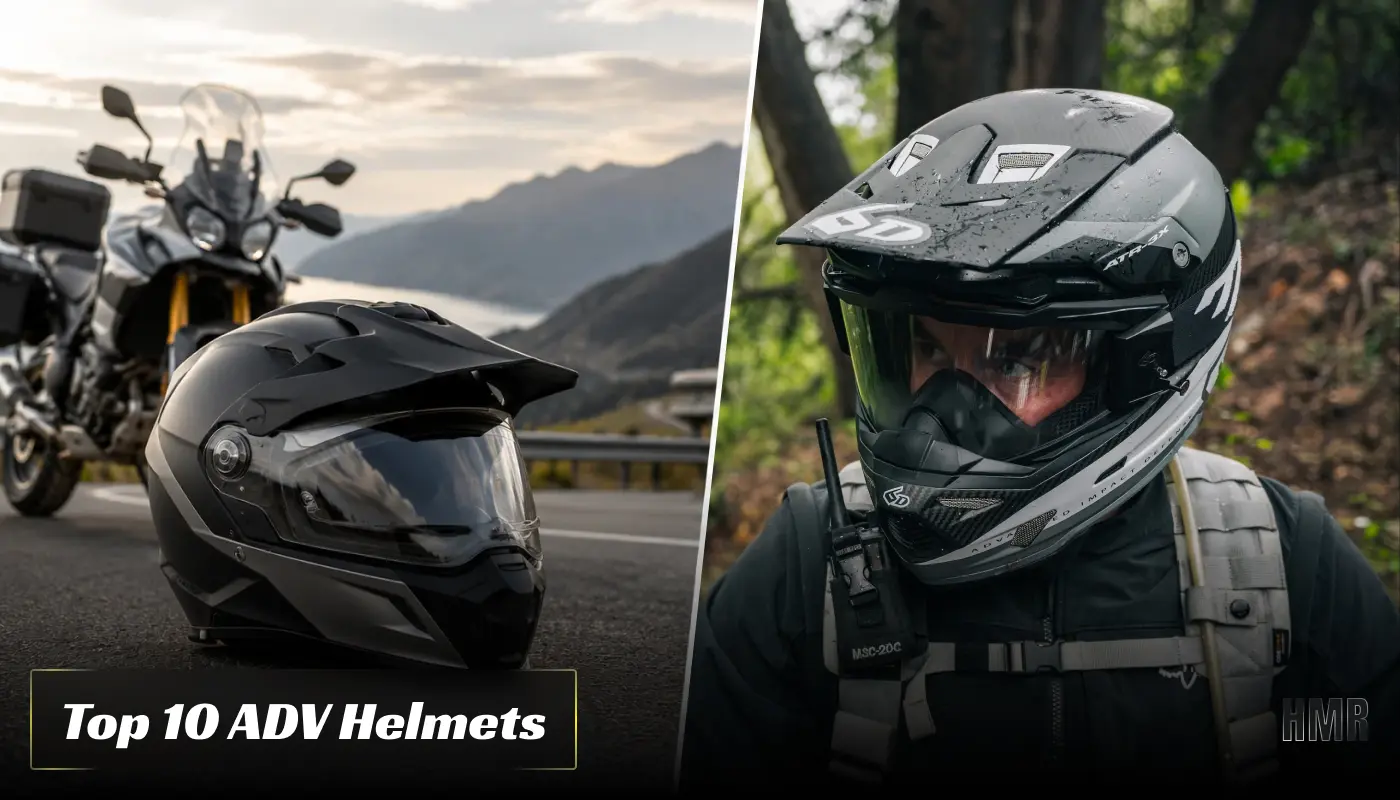
Choosing a helmet for long-distance adventure touring is one of the most consequential gear decisions you’ll make. I’ve spent a good chunk of time digging through real rider reviews, long-term road tests, and spec sheets to put together this list. These are not random picks. Each helmet here earns its spot because of how it performs where it matters most: safety, ventilation, weight, comfort, and that all important on-road to off-road versatility that makes an ADV helmet an ADV helmet. Here is our definitive list of the Best Adventure Motorcycle Helmets 2026: Top 10 ADV Helmets.
Best Adventure Motorcycle Helmets 2026: Top 10 ADV Helmets.
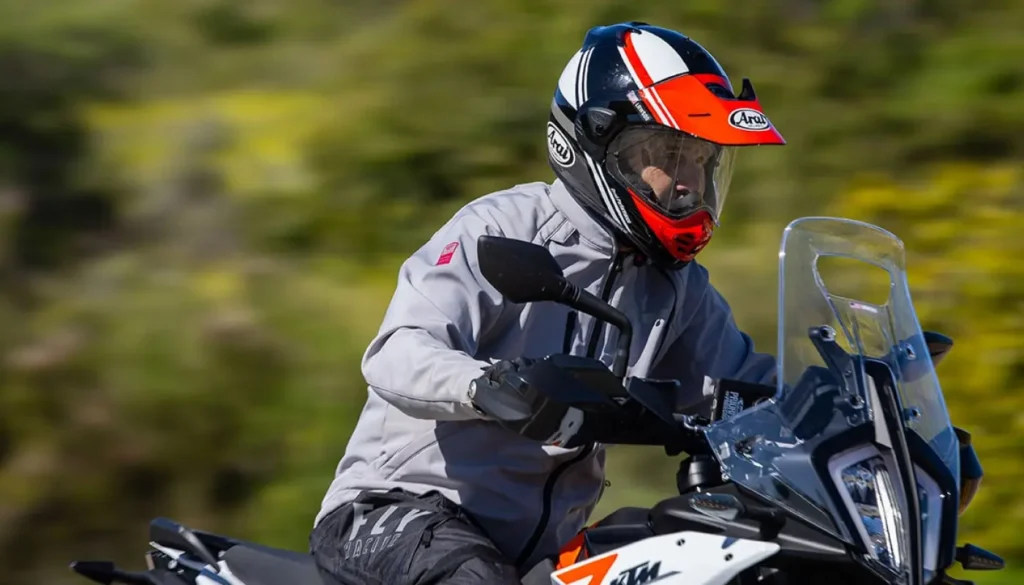
The Arai XD-5 is still the adventure helmet to beat in 2026. It uses Arai’s R75 shell shape, which is made to help deflect impact energy, and it is hand built for a high level of safety and quality. It is also the only helmet here with both Snell M2020 and ECE 22.06 certification.
Arai also improved the ventilation compared with the older XD-4, with much better chin vent airflow that you can feel on hot rides. The tool free VAS-MV Pro shield swap is quick and easy, and the visor clarity at the edges is much better now. If you have $839 to spend and do not need a built in sun visor, the XD-5 remains one of the best adventure touring helmets you can buy.
Arai XD-5 Specs
| Specs | Detail |
|---|---|
| Shell Material | PB-cLc2 Fiberglass Composite |
| Safety Certifications | Snell M2020 + ECE 22.06 + DOT |
| Shell Sizes | 3 (covers XS–2XL) |
| Approximate Weight (M) | 1,550 g |
| Visor System | VAS-MV Pro — Pinlock 120 ready |
| Integrated Sun Visor | No (trade-off for Snell certification) |
| Peak | Fixed, with adjustable lower position |
| Chin Closure | Micro-lock ratchet |
| Goggle Compatible | Yes — large eye port |
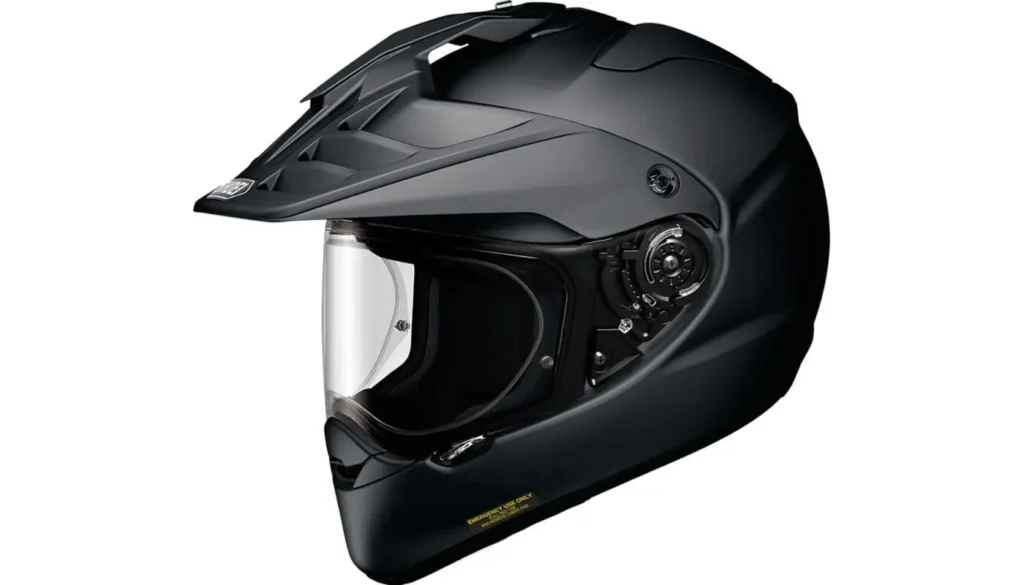
The Shoei Hornet ADV’s biggest advantage may sound simple, but it matters a lot: it comes in four shell sizes, more than any other helmet here. If you have ever been stuck between sizes or lived with a pressure point, this can be the difference between a good fit and a bad one. It also has some of the best padding in the group. The liner feels soft, breathable, and comfortable even after long days of touring..
The AIM+ fiberglass shell stays quiet at highway speeds for an ADV helmet, and the CNS-3 visor gives very clear vision with full Pinlock support. The speaker pockets are also roomy and well placed for a comms system. It may not be the flashiest helmet, but it is one of the most dependable touring options for a wide range of head shapes.
Shoei Hornet ADV Specs
| Specs | Detail |
|---|---|
| Shell Material | AIM+ Fiberglass Composite |
| Safety Certifications | ECE 22.05 + DOT |
| Shell Sizes | 4 — best in class (covers XS–2XL) |
| Approximate Weight (M) | 1,550 g |
| Visor System | CNS-3 — Pinlock 70 ready |
| Integrated Sun Visor | No |
| Peak | Removable (non-adjustable) |
| Chin Closure | EQR quick-release ratchet |
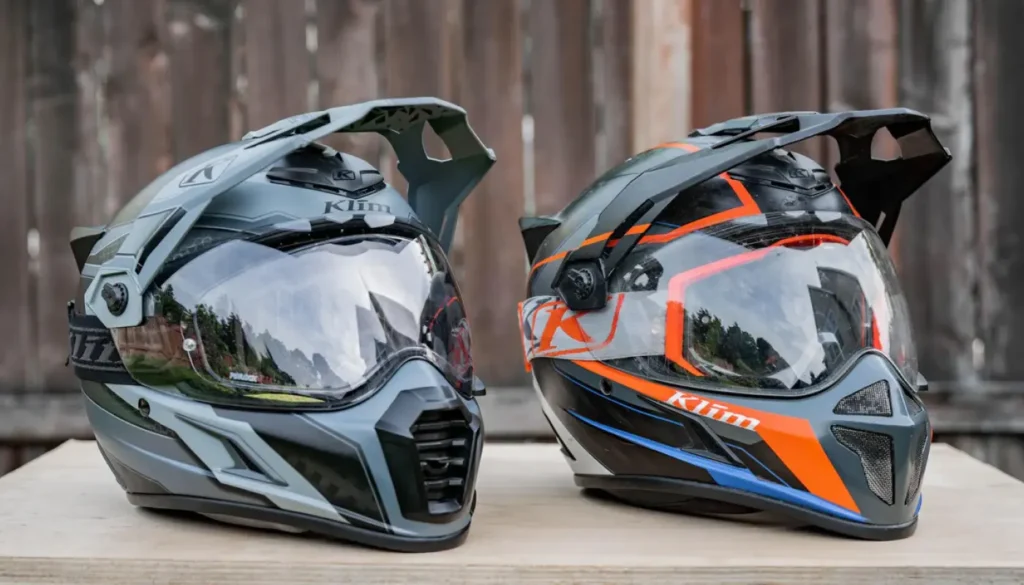
If neck fatigue bothers you on long touring days, the Krios Pro is a strong fix. At about 1,300 grams, it is around 250 grams lighter than the Arai XD-5, making it one of the lightest ECE and DOT certified adventure helmets you can buy. Its full carbon fibre shell and Koroyd energy absorbing material take a smart approach to impact protection, and the ECE 22.06 certification backs that up.
It also offers excellent value because it comes with both a clear visor and a Transitions photochromic shield that darkens in sunlight, plus a FidLock magnetic chin closure that is easy to use even with gloves. For riders who care most about low weight, it is still one of the best choices at this price.
Klim Krios Pro Specs
| Specs | Detail |
|---|---|
| Shell Material | Full Carbon Fiber + Koroyd liner |
| Safety Certifications | ECE 22.06 + DOT |
| Shell Sizes | 2 (S–M and L–2XL) |
| Approximate Weight (M) | 1,300 g — lightest on list |
| Visor System | Clear + Transitions photochromic |
| Integrated Sun Visor | No (Transitions shield does this job) |
| Chin Closure | FidLock magnetic — glove-friendly |
| Goggle Compatible | Yes |
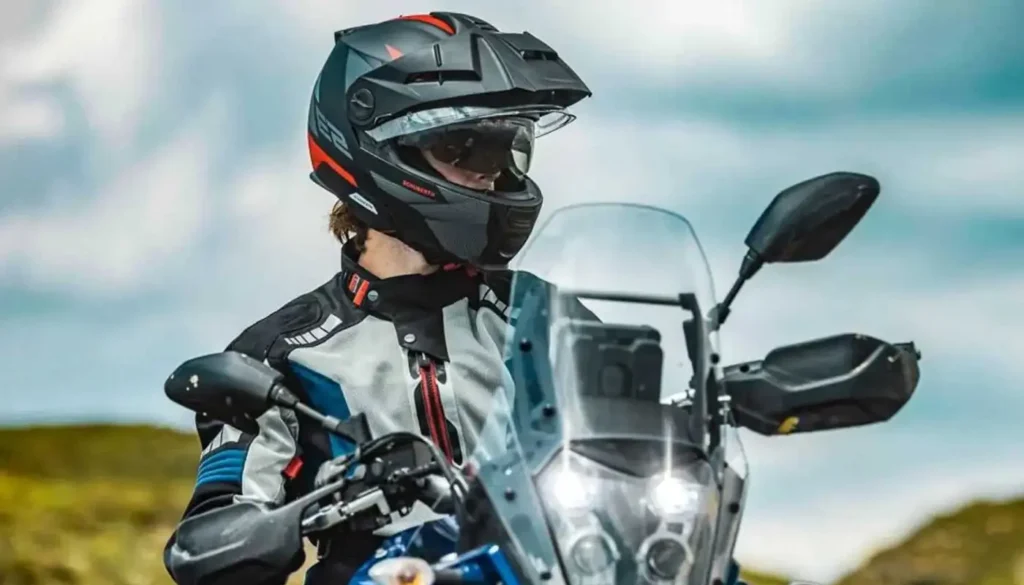
The Schuberth E2 is still one of the best modular helmets for touring. What makes it stand out is its ECE 22.06 certification in both the open and closed chin bar positions, so you do not give up safety for convenience.
It is also pre wired for Schuberth’s SC2 Bluetooth system and has been wind tunnel tested for low noise. The micro ratchet chin strap works smoothly, and the built in sun visor is easy to use. Many long distance riders find that once they try a good flip front helmet like this, they do not want to go back.
Schuberth E2 Specs
| Specs | Detail |
|---|---|
| Shell Material | Fiberglass Composite |
| Safety Certifications | ECE 22.06 open AND closed + DOT |
| Shell Sizes | 2 |
| Approximate Weight (M) | 1,920 g |
| Visor | Pinlock 120 ready |
| Integrated Sun Visor | Yes — retractable, lever-operated |
| Comms Ready | Pre-wired for SC2 system |
| Chin Closure | Micro-ratchet |
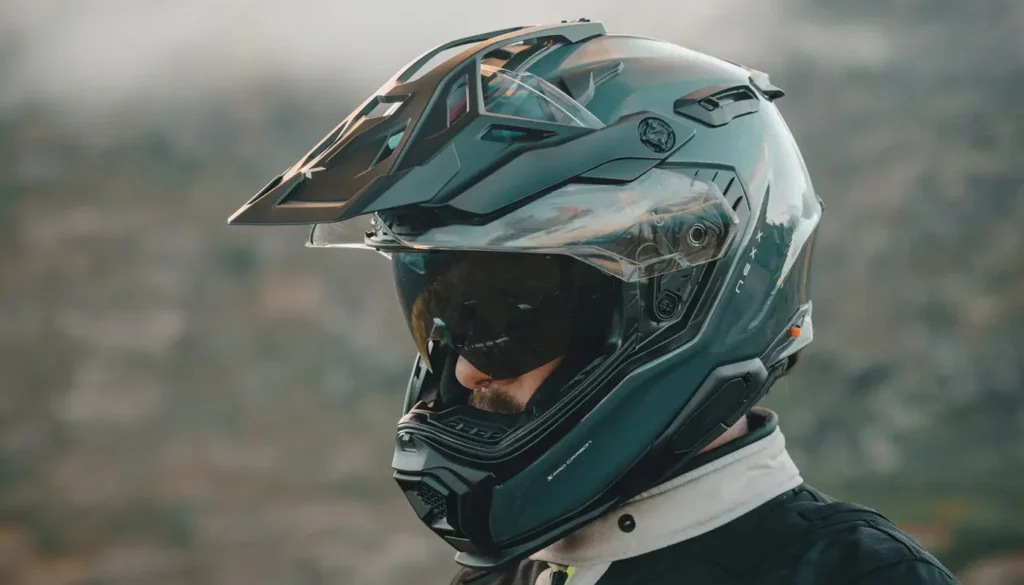
The Nexx X.WED3 stands out in the ADV helmet segment because it uses real carbon fiber at a price most brands reserve for fiberglass. It also has three shell sizes for a better fit, ECE 22.06 certification, a GoPro mount, and a spare smoked visor included in the box, which adds real value for touring riders.
Nexx also offers an unusual five-year warranty option, which shows confidence in the helmet’s build quality. The only weak point is the interior finish and liner materials, which are not quite as refined as some premium Japanese helmets. Still, for a carbon touring helmet at $599, it offers strong value and a very good feature set.
Nexx X.WED3 Specs
| Specs | Detail |
|---|---|
| Shell Material | Carbon Fiber |
| Safety Certifications | ECE 22.06 + DOT |
| Shell Sizes | 3 |
| Integrated Sun Visor | Yes — integrated retractable |
| Extras Included | GoPro mount + spare smoked visor |
| Warranty | 5-year extended warranty available |
| Goggle Compatible | Yes |
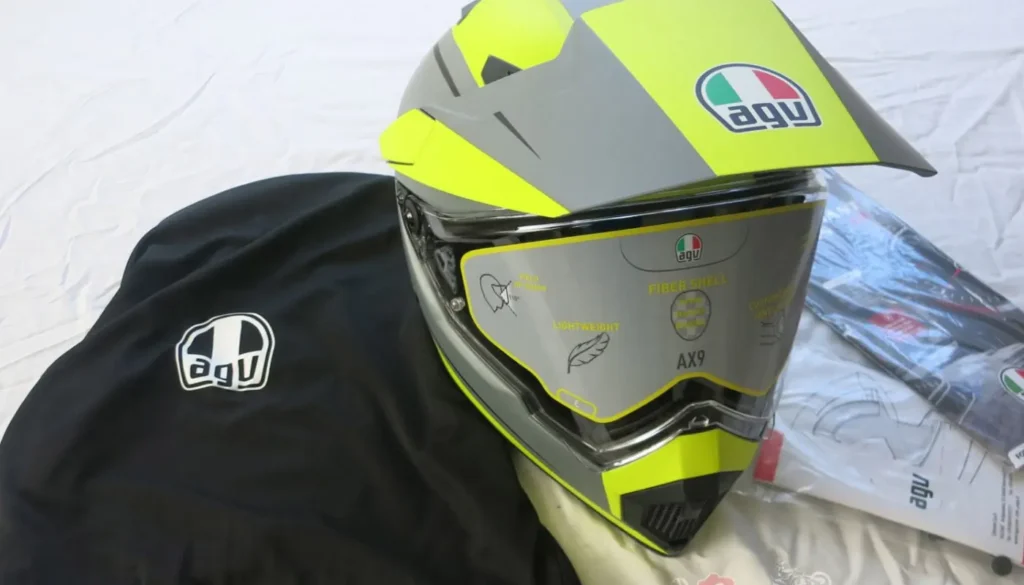
The AGV AX9 shows smart Italian helmet design focused on what adventure riders really need. Its interior liner is one of the most breathable and comfortable in the ADV class, especially on long touring days when comfort starts to matter most. The removable chin vent, micro-opening visor, and adjustable peak make it a well thought out helmet for real-world use.
AGV AX9 Specs
| Specs | Detail |
|---|---|
| Shell Material | Fiberglass Composite |
| Safety Certifications | ECE 22.06 + DOT |
| Shell Sizes | 3 |
| Integrated Sun Visor | Yes |
| Peak | Adjustable |
| Chin Vent | Removable |
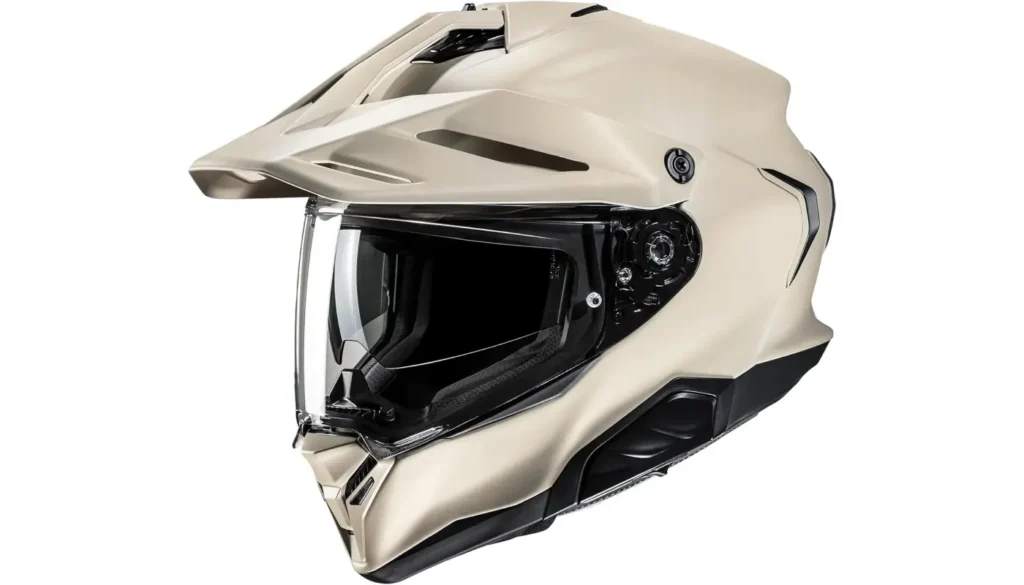
The HJC RPHA 60 is the newest model in HJC’s flagship RPHA line and has quickly become a favorite among long-distance riders. Made with HJC’s Premium Integrated Matrix fiberglass composite, it weighs around 1,693 grams in a medium size, which is a fair weight for the features it offers.
What makes it stand out is its value. It is ECE 22.06 certified, comes with a Pinlock 120XLT anti-fog insert, a three-step adjustable sun visor, and a tool-free removable peak. Riders who have used it on long tours report excellent stability at speed, even with the peak fitted, along with strong comfort over many hours. The cheek pads can be swapped between sizes for a better fit, and the helmet is ready for HJC’s 2nd Gen SMART HJC Bluetooth system.
HJC RPHA 60 Specs
| Specs | Detail |
|---|---|
| Shell Material | PIM EVO Fiberglass Composite |
| Safety Certifications | ECE 22.06 + DOT |
| Shell Sizes | Multiple (XS–XXL) |
| Approximate Weight (M) | 1693 g |
| Visor System | HJ-47 — Pinlock 120XLT included |
| Integrated Sun Visor | Yes — 3-step adjustable |
| Comms Ready | Pre-wired for SMART HJC 2nd Gen |
| Warranty | 5 years from purchase (7 from manufacture) |
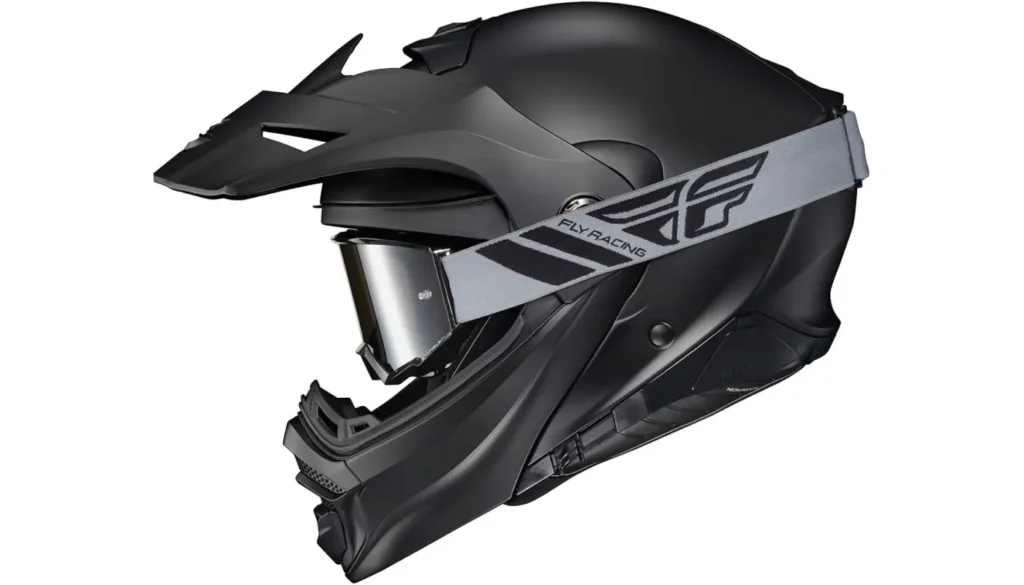
The Scorpion EXO-AT960 is still one of the few affordable modular adventure helmets worth buying. It can be used as a full-face ADV helmet with the peak attached, or with the peak removed for a cleaner touring look. The large eye port gives great side and downward visibility, which is very useful off-road, and the chin bar is easy to open with a simple one-lever release.
At about 4.1 lbs, it is heavier than many other helmets, but that is the trade-off for the flip-up design, drop-down sun visor, and adventure peak at this price. The KwikWick liner is removable and washable, and the helmet works well with Scorpion’s EXO-COM Bluetooth system.
Scorpion EXO-AT960 Specs
| Specs | Detail |
|---|---|
| Shell Material | Advanced Polycarbonate |
| Safety Certifications | ECE 22.06 (P/J) + DOT |
| Shell Sizes | 3 |
| Approximate Weight (M) | 1,870 g |
| Chin Bar | Flip-up, single-lever release |
| Integrated Sun Visor | Yes — Speedview drop-down |
| Comms Ready | EXO-COM port |
| Goggle Compatible | Yes |
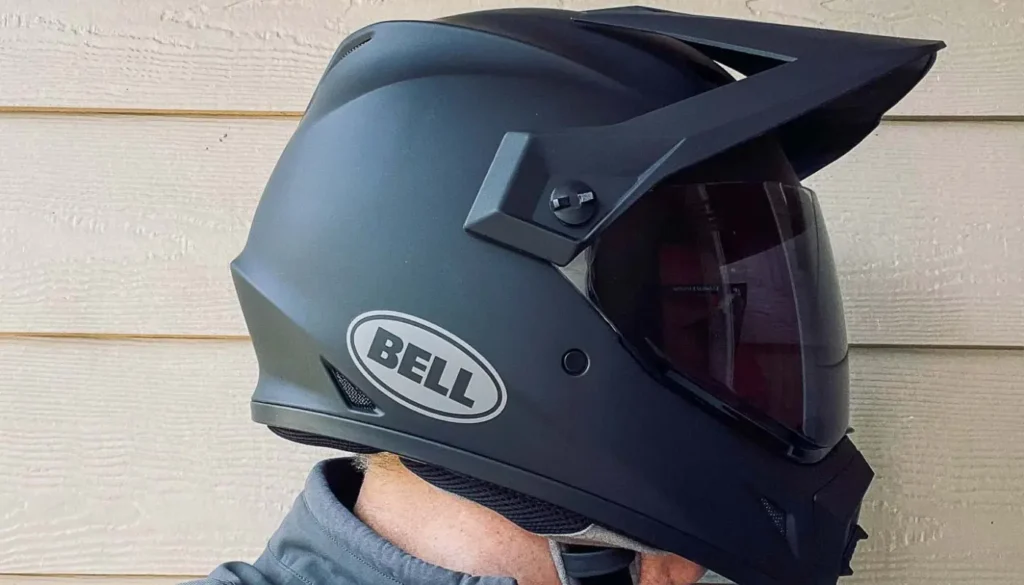
The Bell MX-9 Adventure MIPS is still one of the best-value adventure helmets you can buy. It offers MIPS safety tech, a lighter feel than many budget rivals, and a strong mix of road comfort and off-road use. Riders also like its good ventilation, lower wind noise at highway speeds, and adjustable peak, which helps cut buffeting.
Bell MX-9 Adventure MIPS Specs
| Specs | Detail |
|---|---|
| Shell Material | Polycarbonate |
| Safety Certifications | ECE 22.06 + DOT, MIPS technology |
| Shell Sizes | 3 |
| Approximate Weight (M) | 1,687 g |
| Integrated Sun Visor | No (ProTint photochromic shield available separately) |
| Peak | Adjustable angle, quick-detach |
| Chin Closure | Double D-ring |
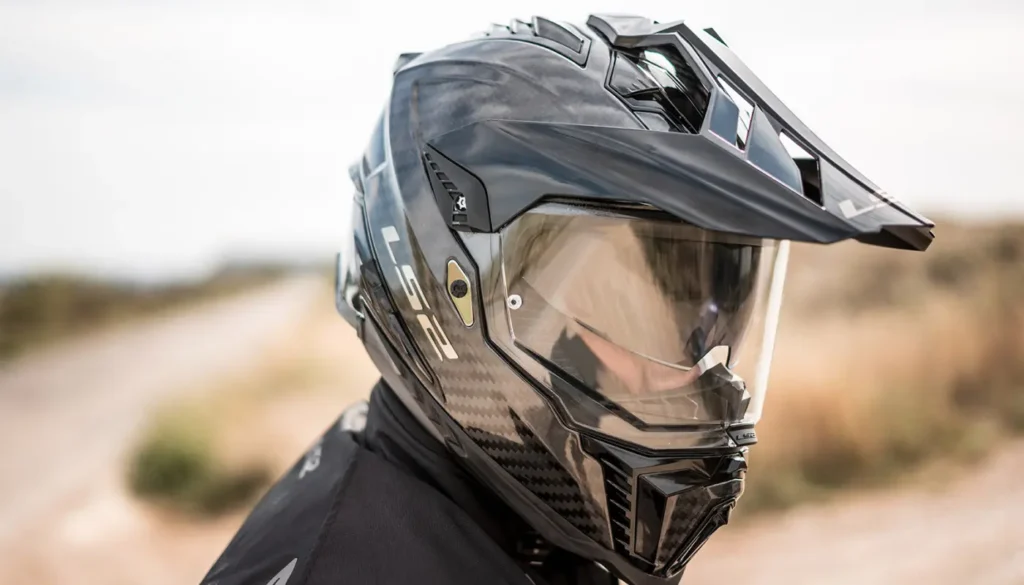
The LS2 Explorer Carbon is a strong value carbon fibre adventure helmet. It weighs about 1,450g, plus or minus 50g in a medium size, which makes it very light for the price, and it is second only to the much more expensive Klim Krios Pro on this list. Its 6K carbon fibre shell comes in three shell sizes, which helps improve fit and keeps bulk down.
It also includes a 3D Optical A-class visor with anti-scratch and UV protection, a drop-down sun visor, and a Pinlock Max Vision insert in the box at no extra cost. Riders say it stays comfortable on long trips thanks to its soft, removable, washable liner and large adjustable vents that do a good job of keeping air flowing. Some users have mentioned small fit issues with the Pinlock and a bit of wind noise, but overall it remains a very strong package for the money.
LS2 Explorer Carbon Specs
| Specs | Detail |
|---|---|
| Shell Material | 6K Carbon Fiber |
| Safety Certifications | ECE 22.06 + DOT |
| Shell Sizes | 3 (covers XS–3XL) |
| Approximate Weight (M) | 1,450 g (+/- 50g) |
| Integrated Sun Visor | Yes — drop-down |
| Visor System | 3D Optical A-Class — Pinlock Max Vision included |
| Chin Closure | Double D-ring with metal security plates |
| Goggle Compatible | Yes |
Quick Comparison Table
| Rank | Helmet | Price (USD) | Weight (M) | Certification | Best For |
|---|---|---|---|---|---|
| 1 | Arai XD-5 | $839 | 1,550g | Snell M2020 + ECE 22.06 | Best Overall |
| 2 | Shoei Hornet ADV | $779 | 1,550g | ECE 22.05 | Best Fit Range |
| 3 | Klim Krios Pro | $699 | 1,300g | ECE 22.06 | Lightest in Class |
| 4 | Schuberth E2 | $849 | 1,920g | ECE 22.06 (open & closed) | Best Modular |
| 5 | Nexx X.WED3 | $599 | N/A | ECE 22.06 | Best Carbon Value |
| 6 | AGV AX9 | $699 | N/A | ECE 22.06 | Best Liner Comfort |
| 7 | HJC RPHA 60 | $579 | 1,693g | ECE 22.06 | Best Under $600 |
| 8 | Scorpion EXO-AT960 | $310 | 1,870g | ECE 22.06 (P/J) | Best Budget Modular |
| 9 | Bell MX-9 Adventure MIPS | $230 | 1,687g | ECE 22.06 + MIPS | Best Value Under $250 |
| 10 | LS2 Explorer Carbon | $465 | 1,450g | ECE 22.06 | Best Entry-Level Carbon |
Category Winners at a Glance
Best Overall
Arai XD-5 — Snell M2020 + ECE 22.06, best-in-class ventilation, exceptional visor clarity.
Best Modular
Schuberth E2 — ECE 22.06 in both positions, integrated comms, quietest modular tested.
Lightest Helmet
Klim Krios Pro — 1,300 g with carbon + Koroyd and a Transitions photochromic shield included.
Best Under $200
Bell MX-9 Adv MIPS — MIPS, 3 shell sizes, and DOT/ECE at an honest $199.
Best Fit Range
Shoei Hornet ADV — 4 shell sizes; the first choice for riders who have struggled with fit.
Best for Comms
HJC RPHA 60 — Best-engineered speaker pockets and mic routing of any helmet on this list.
Frequently Asked Questions
Our Thoughts
For anyone shopping right now, our advice is simple. If budget is no concern and you want the best overall package, the Arai XD-5 is still the one to beat. And if you are just getting started in adventure riding and want genuine safety tech without breaking the bank, the Bell MX-9 Adventure MIPS remains an outstanding starting point.