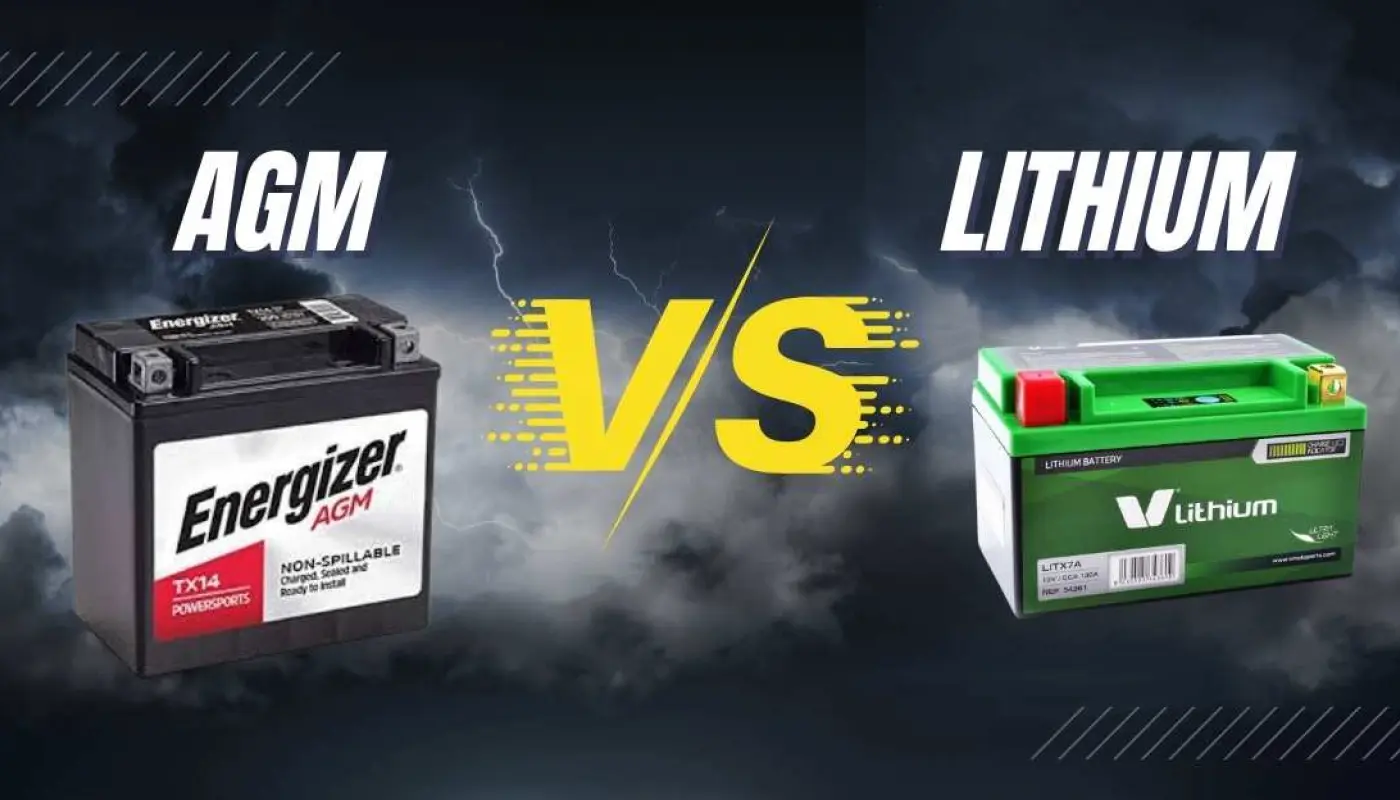
Motorcycle technology continues to evolve rapidly, and one of the most discussed upgrades among riders today is the switch from traditional AGM batteries to modern lithium alternatives.
For the DIY-focused owner, the decision to replace a dead battery is more than just a trip to the local shop. It’s an opportunity to optimize your bike. In 2026, the industry has largely settled into a two-horse race: the reliable, heavy, and forgiving Absorbent Glass Mat (AGM) lead-acid battery versus the high-performance, featherlight, and technologically demanding Lithium Iron Phosphate (LiFePO4) battery.
Lithium vs. AGM Motorcycle Batteries In 2026: Is Upgrade Worth It?
For decades, AGM (Absorbent Glass Mat) batteries have been the reliable standard for motorcycles thanks to their affordability, durability, and simple charging requirements. However, lithium batteries have gained popularity in recent years due to dramatic weight savings, higher cold-cranking performance, and improved lifespan. For riders chasing performance gains, removing several pounds from a motorcycle by replacing the battery can feel like an easy upgrade. But the decision is not always straightforward. Lithium batteries behave differently in cold temperatures, may require specific chargers, and typically cost significantly more than AGM options.
In this guide, we break down the differences in cold-crank amps, weight reduction, charging compatibility, and long-term reliability to help determine whether upgrading to a lithium motorcycle battery in 2026 truly makes sense for your riding style.
Lithium vs. AGM Motorcycle Batteries (2026 Comparison)
| Feature | Lithium (LiFePO4) Battery | AGM (Absorbed Glass Mat) Battery |
|---|---|---|
| Weight | Ultra-light (2–5 lbs) – ideal for performance bikes | Heavier (10–15 lbs) – stable and robust |
| Lifespan | 5–10 years (long-term investment) | 3–5 years (standard lifespan) |
| Starting Power (CCA) | Very high cranking power for quick starts | Reliable but lower peak output |
| Charging Time | Fast (1–2 hours) | Slower (6–12 hours) |
| Price Range | Higher ($100–$250+) | Budget-friendly ($50–$120) |
| Maintenance | Minimal (built-in BMS protection) | Maintenance-free, simple install |
| Cold Weather Performance | Can struggle in freezing temps | Performs better in cold climates |
| Self-Discharge Rate | Very low (great for storage) | Higher discharge over time |
| Durability (Vibration) | Excellent resistance | High resistance (OEM standard) |
| Compatibility | May require compatible charger/regulator | Works with most stock systems |
| Ease of Use | Slightly more technical setup | Plug-and-play reliability |
| Best Use Case | Performance, racing, ADV, weight savings | Daily commuting, touring, OEM replacement |
The Anatomy of the Choice
1. AGM (Absorbent Glass Mat): The Reliable Workhorse
AGM is the evolution of traditional lead-acid technology. Inside, the electrolyte is absorbed into a fiberglass mat squeezed between the lead plates. Because it is sealed, it’s virtually maintenance-free and spill-proof.
-
The Vibe: AGM is “plug-and-play.” It is forgiving of charging errors, stable in extreme cold, and has a flat, predictable discharge curve. When an AGM gets old, it gives you plenty of warning: the engine cranks slower and slower, like a tired runner, before finally giving up.
-
The Weight: It’s heavy—often significantly so. On a lightweight middleweight sportbike, you can actually feel the difference in the center of gravity, but for heavy adventure bikes or touring cruisers, the 10-15 lb difference is negligible.
2. LiFePO4 (Lithium Iron Phosphate): The Modern Athlete
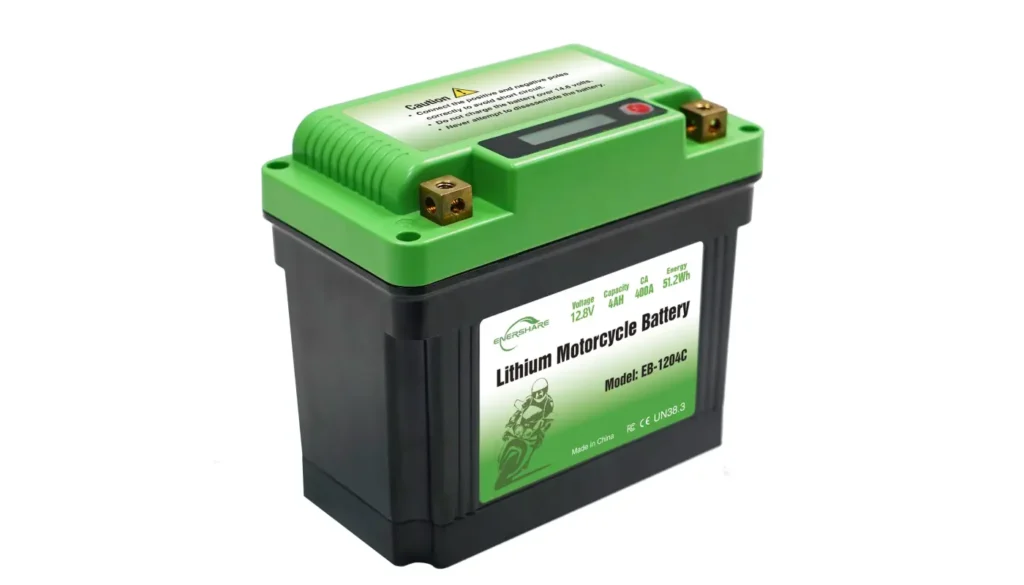
Lithium batteries—specifically the LiFePO4 variant used in motorcycles—are essentially solid-state-adjacent performance parts.
-
The Vibe: They are shockingly light. If you’ve never held one, you will laugh the first time you pick one up; it feels empty. They provide a “snappier” start because they maintain a higher voltage right up until the moment they are depleted. They don’t “fade” slowly like lead-acid; they deliver high power until they hit a specific threshold, and then they stop abruptly.
-
The Tech: They feature a Battery Management System (BMS), a tiny computer inside the plastic casing that balances the cells, prevents overcharging, and keeps the battery from “thermal runaway.”
Performance Metrics: The 2026 Reality
Cold-Cranking Amps (CCA): The Winter Variable
We need to address the elephant in the garage: cold weather. Lead-acid chemistry (AGM) has a distinct advantage here. Its internal resistance is less affected by cold. An AGM battery will reliably start a bike in freezing conditions, provided the battery is healthy.
Lithium batteries, by contrast, have high internal resistance in the cold. It’s not that they can’t start the bike; it’s that they are “sleeping.” If you are in a cold climate (below 5°C), you have to “wake up” the battery. This means turning on the ignition and letting the headlight run for a minute or two to warm the battery chemistry. Once the battery warms up from the internal chemical reaction, it will provide massive cranking power.
The Bottom Line: If you ride year-round in freezing, snowy conditions, AGM is arguably the “set it and forget it” choice. If you are a fair-weather rider or live in a temperate climate, the Lithium battery’s performance is superior.
Weight Savings: Is it Real?
It is a cliché to say “shaving weight makes your bike faster,” but it’s true. The battery is usually located high in the chassis or near the engine. Replacing a 14-lb AGM with a 3-lb Lithium battery removes 11 lbs of mass from the highest, most central point of the bike. While you might not set a new lap record on your commute to the office, the reduction in weight changes how the bike “flicks” from side to side. It makes the machine feel more agile. For adventure riders, keeping the weight low is even more critical.
The Compatibility Minefield: Chargers and Maintenance
Cold-Cranking Amps (CCA): The Winter Variable
This is where most owners make their mistake. We are conditioned to treat batteries like disposable items, but Lithium batteries require a change in our mental workflow.
The Charger Trap
You cannot—I repeat, you absolutely cannot—use a standard lead-acid “smart charger” (or a generic trickle charger) on a Lithium battery if that charger has a “desulfation” or “recondition” mode.
Parasitic Drain
Both battery types suffer if you leave your bike sitting for months with the alarm, immobilizer, or GPS tracker drawing power. However, Lithium batteries have a much lower “self-discharge” rate (the rate at which they lose charge on their own). A Lithium battery can sit on a shelf for a year and still start a bike; an AGM battery will likely be sulfated and dead.
However, if your bike has a parasitic drain (like an aftermarket alarm), a Lithium battery will eventually drain, and if it drops below its low-voltage cutoff, the BMS will “trip” to save itself. Some modern Lithium batteries have a “Reset” button (like those from Antigravity) that allows you to wake the battery up to start the bike even after it has tripped its internal safety switch. This is a game-changer for the forgetful owner.
Is the 2026 Upgrade Worth It?
Let’s be candid. The “worth it” calculation depends on your relationship with your bike.
Stay with AGM if:
Switch to Lithium if:
The Essential Maintenance Gear Section
If you are a maintenance-focused owner, your garage should have a dedicated “power station” corner. Here is the kit you need to maintain both battery chemistries effectively.
1. The Smart Charger (The “Must-Have”)
Do not buy a generic automotive charger. You need a dedicated Powersports Smart Charger.
2. The Digital Multimeter
If you don’t own one, you aren’t doing motorcycle maintenance. You need a high-quality multimeter to measure your charging voltage.
3. Battery Terminal Protection
Regardless of the battery type, the enemy is corrosion. Over time, moisture and current flow can cause a green/white powdery buildup on your terminals.
4. The “Voltage Watch” (Optional but Smart)
Some modern bikes come with battery health monitoring, but if yours doesn’t, consider a small, aftermarket LED voltage indicator that you can tuck under the seat or mount on the dash. It keeps you aware of your system’s health in real-time, letting you spot a failing charging system before you’re stranded in the middle of nowhere.
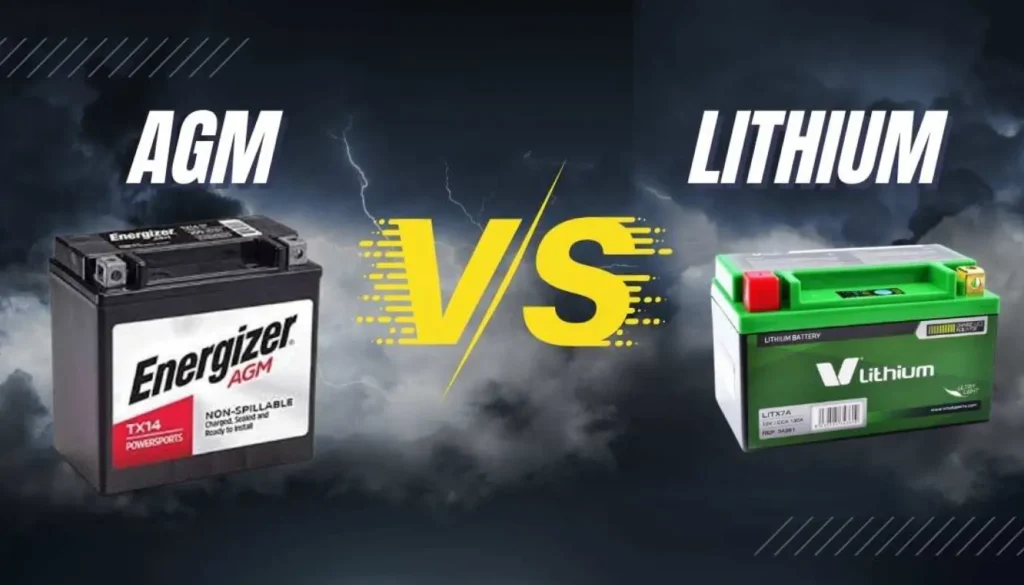
Lithium vs. AGM Motorcycle Batteries In 2026: People Also Ask
What is the main difference between lithium and AGM motorcycle batteries?
Lithium batteries are significantly lighter and offer higher cranking power, while AGM batteries are cheaper, widely compatible with chargers, and perform more consistently in cold temperatures.
How much weight can a lithium motorcycle battery save?
Most lithium batteries weigh 60–80% less than traditional AGM batteries, often saving between 2–4 kg (4–9 lbs) depending on the bike.
Do lithium batteries work well in cold weather?
Lithium batteries can struggle in extremely cold temperatures. However, many riders “warm” the battery by briefly turning on the ignition before starting the engine.
Can I charge a lithium battery with a normal motorcycle charger?
Not always. Many lithium batteries require lithium-compatible chargers to prevent overcharging and extend battery lifespan.
Do lithium motorcycle batteries last longer than AGM?
In ideal conditions, lithium batteries can last longer than AGM batteries, but lifespan depends heavily on charging habits and climate conditions.
Final Verdict — Is the Upgrade Worth It?
The lithium vs. AGM debate ultimately comes down to priorities rather than technology alone.
Choose lithium batteries if you want maximum weight reduction, strong starting performance, and modern technology benefits—especially for sport, racing, or performance-focused motorcycles.
Stick with AGM batteries if reliability, affordability, and cold-weather performance are more important than shaving a few pounds from your bike.
For many everyday riders, AGM remains the practical and budget-friendly choice. But for enthusiasts looking to reduce weight and modernize their bike, lithium batteries represent a compelling upgrade in 2026.
Final Verdict: Lithium batteries are an excellent performance upgrade—but only if you understand their charging requirements and climate limitations.