If you’ve ever grabbed a fistful of brake on a steep, wet descent and felt absolutely nothing or worse, a mushy, fading mess you already know that not all brake pads are created equal. The compound inside that little pad makes an enormous difference, and choosing the wrong one for your riding style isn’t just a performance issue; on technical terrain, it’s a safety one.
Sintered brake pads get talked about a lot, but the conversation usually stops at “they’re harder and last longer.” That’s true, but it’s only half the story. The real question is: which sintered compound, for which kind of riding and when does it make more sense to go organic instead?
So this guide breaks it all down mountain versus dirt, heat versus feel, longevity versus lever feedback so you can make the call before you’re mid-descent wishing you had.
Brake Pad Sintering: Choosing Compounds for Mountains vs. Dirt
Brake pads are one of the most overlooked yet critical performance components on any motorcycle. Riders obsess over suspension upgrades and horsepower numbers — but when descending steep mountain passes or navigating loose dirt trails, braking performance determines control, confidence, and safety. The debate between sintered and organic brake pad compounds isn’t new, but modern riding conditions in 2026 have made the choice more important than ever. Adventure bikes are heavier. Touring loads are greater. Mountain descents are longer. Dirt sections are rougher. Heat management now directly affects brake fade, rotor lifespan, and modulation feel at the lever.
But choosing the wrong compound for your terrain can mean overheating on mountain switchbacks or unpredictable feel on gravel surfaces. In this guide, we break down how brake pad sintering works, compare heat dissipation characteristics, explain what riders mean by “bite,” and evaluate long-term rotor longevity across different riding environments in the USA, UK, and European mountain regions.
What Is Sintering, Exactly?
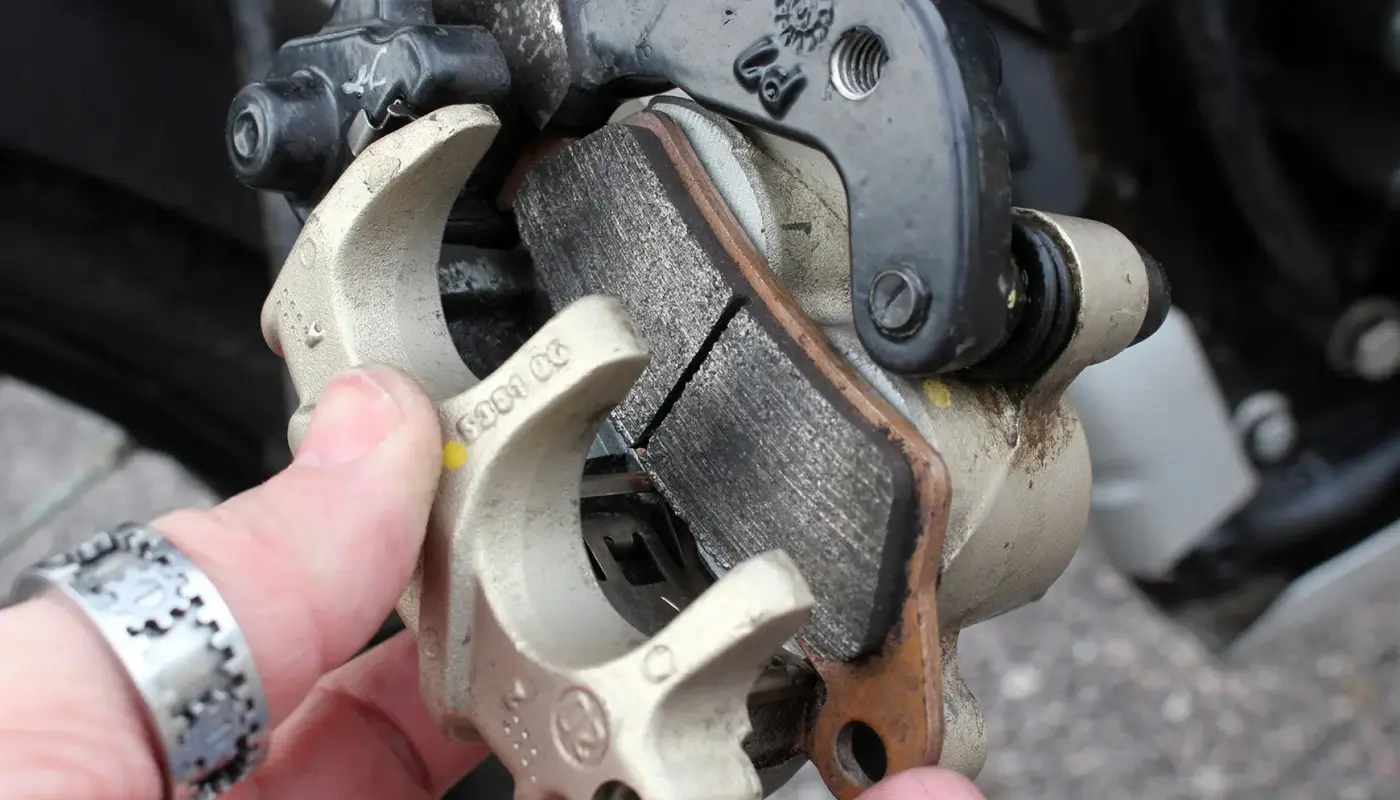
Sintering is a manufacturing process where metallic particles typically iron, copper, tin, and other alloys are fused together under intense heat and pressure, without ever fully melting. The result is an incredibly dense, hard compound that bonds metal to metal at a molecular level. Unlike resin (organic) pads that use a rubber or epoxy binder, sintered pads are held together purely by that metallurgical bond.
This matters because it’s exactly why sintered pads behave so differently at temperature. Where an organic pad softens, glazes, and fades under prolonged heat, a sintered compound actually improves slightly as it warms up the friction interface “opens up” and grip increases. That’s the fundamental mechanical advantage that makes sintered the go-to for any riding that puts sustained load on your brakes. The tradeoff? That same density makes sintered pads aggressive on rotors, slower to bed in, and somewhat wooden in feel until they reach operating temperature which can feel disconcerting on a cold morning trail head.
The Mountain Dilemma: Heat Dissipation & Fade
When you’re descending a mountain pass, you aren’t just using your brakes; you’re converting kinetic energy into thermal energy. A lot of it.
The Trade-Off: Sintered pads pass that heat directly into your brake fluid and caliper pistons. If you’re pushing hard on a track or a long, steep mountain pass, make sure your brake fluid is fresh, or you might experience “boil” even if the pads are holding up.
The Dirt Reality: Grit, Mud, and Durability
Off-road riding is a completely different fight. You aren’t battling heat; you’re battling abrasives.
Quick Comparison: Which One for You?
| Feature | Sintered (Metallic) – Mountains/Downhill | Organic/Resin – XC/Trails | Semi-Metallic – Mixed Dirt |
|---|---|---|---|
| Heat Resistance | Up to 1000°C; no fade on long descents | 300°C; fades on steep/muddy runs | 500-700°C; good for moderate heat |
| Durability/Longevity | 2-3x longer in wet/abrasive dirt; ideal for enduro | Wears fast in mud/rocks; quieter daily | Balanced life; versatile for trails |
| Wet/Mud Performance | Excellent; consistent bite in PNW rains | Poor; swells/slips in wet dirt | Decent; better than organic |
| Modulation/Feel | Strong initial bite; less progressive | Smooth, forgiving for technical lines | Firmer than organic; trackable |
| Noise Level | Louder; needs warmup | Silent operation | Moderate squeal possible |
| Rotor Wear | Higher; check rotors every 5-10 sets | Minimal wear | Moderate; longer rotor life |
| Best USA Use | Rocky Mountains DH, Moab dirt jumps | East Coast XC, smoother singletrack | Midwest enduro/trail mix |
| Price (per set) | $40-70 (e.g., EBC HH, Gorilla Pro) | $25-45 (e.g., Shimano resin) | $30-55 |
Brake Pad Sintering: People Also Ask
What are sintered motorcycle brake pads?
Sintered brake pads are made by fusing metallic particles under heat and pressure, creating a dense compound that resists extreme temperatures and delivers strong braking performance.
Do sintered pads wear rotors faster?
Yes, generally. Their metallic composition can increase rotor wear compared to softer organic pads, especially in everyday commuting use.
Are organic brake pads better for dirt riding?
Often, yes. Organic pads provide smoother engagement and better modulation, reducing the likelihood of abrupt lock-ups on loose terrain.
What is brake “bite”?
“Bite” refers to how aggressively brakes engage when the lever is first applied. Sintered pads usually offer stronger initial bite compared to organic compounds.
Can I mix sintered front pads with organic rear pads?
Yes, many riders run sintered pads up front for stopping power and organic pads at the rear for better modulation and reduced rotor wear.
Final Verdict — Choosing the Smart Compound
There is no universal “best” brake pad — only the best compound for your riding environment.
Final Verdict: For mountains, choose heat resistance. For dirt, choose modulation. Your rotors — and your confidence — will last longer because of it.