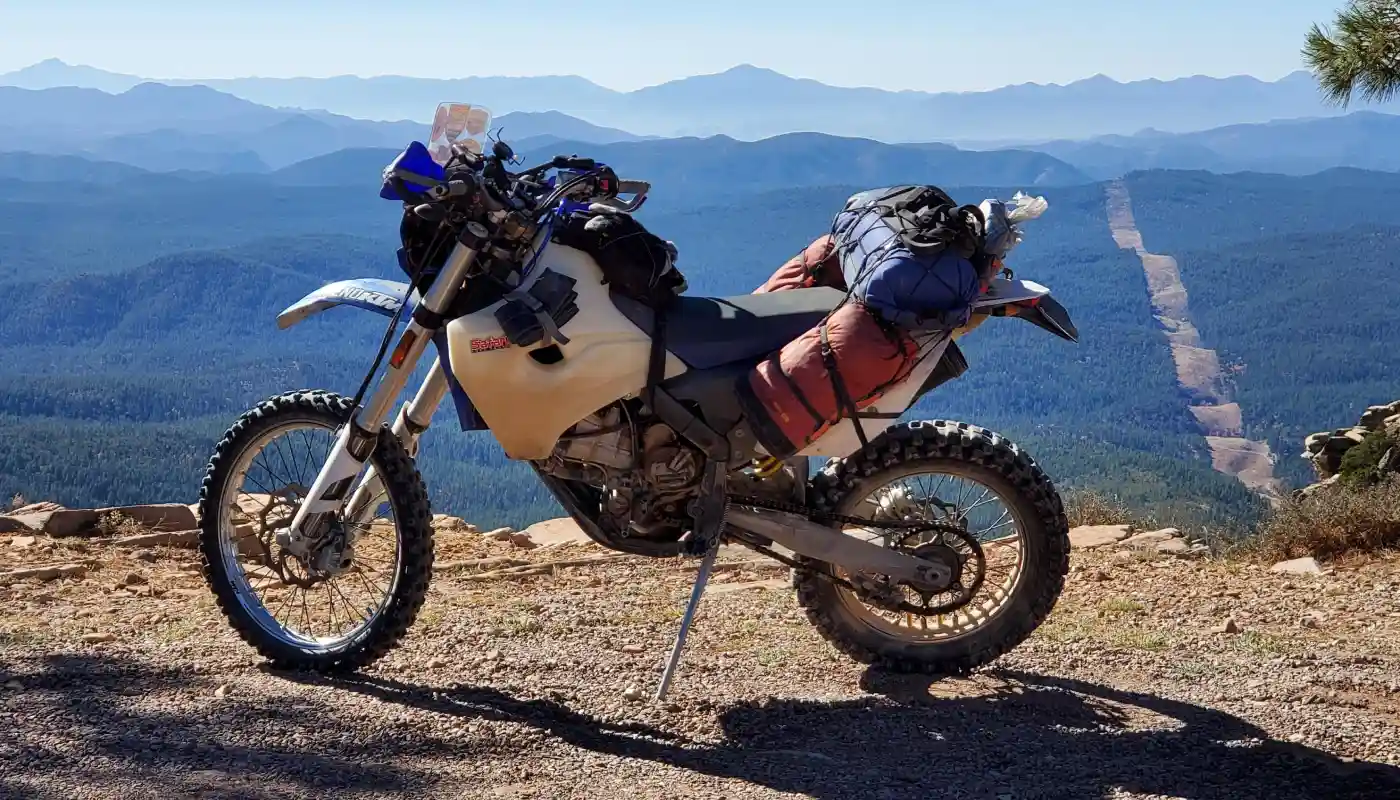
A 3,000-mile tour is more than just a ride; it’s a commitment. Whether you are aiming for the high passes of the Rockies, the rugged North Coast 500 in Scotland, or the winding coastal roads of the Mediterranean, your adventure bike is your lifeline. At this distance, “minor issues” don’t stay minor they become trip-enders.
This guide covers the “Big Three”—Bolts, Fluids, and Tires—plus the essential gear to ensure that your 3,000-mile story is about the scenery, not the recovery truck.
How To Prep Your Adventure Bike For a 3,000-Mile Tour, Guide.
In this guide, we break down a practical, essential checklist to help you prepare your adventure bike for a 3,000-mile journey. Whether you’re riding across states, countries, or continents, this step-by-step prep ensures your bike is reliable, safe, and ready for the adventure ahead. Vibration is the enemy of every adventure bike. Between high-speed motorway drones and corrugated gravel tracks, your bike is effectively trying to shake itself apart. A 3,000-mile tour will involve millions of engine revolutions and countless bumps.
The Systematic Walk-Around
Don’t just look; touch. Use a torque wrench and the “Rule of Three”: Check your front end, your mid-section, and your rear.
Tip
Use a “Paint Pen” or a Sharpie to put a small “witness mark” across the head of important bolts and the frame. During your morning pre-ride check on the tour, a quick glance will tell you if a bolt has moved—no tools required.
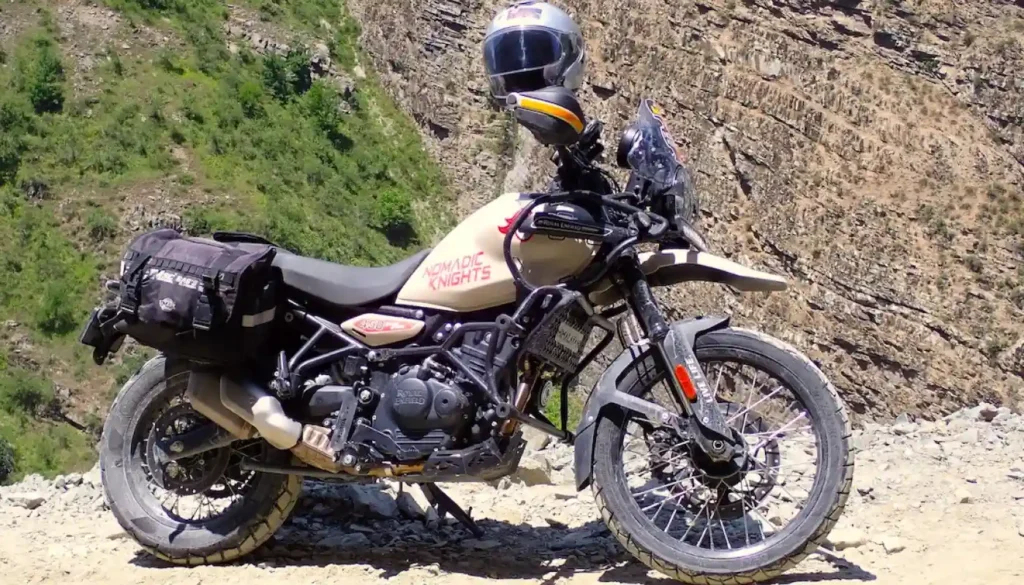
Fluid Dynamics: The Lifeblood of the Machine
If you are starting a 3,000-mile journey, “starting fresh” is the only logical choice. Even if your oil has 1,000 miles left on its interval, change it now. You want the maximum TBN (Total Base Number) and viscosity protection when you’re pushing through a 100-degree desert or a freezing mountain rainstorm.
The Essential Fluid Checklist
The Rubber Equation: Tires for the Long Haul
Tire choice for a 3,000-mile tour is a balancing act. You need something that won’t “square off” on the highway but still offers grip when the pavement ends.
The “Start New” Rule
Unless your tires have 80% tread remaining, replace them. A tire that looks “okay” at the start will be a bald, dangerous mess by mile 2,500.
2026 Comparison: Top Adventure Tourers for 3,000+ Miles
| Bike Model | Fuel Range (Approx.) | Service Interval | Luggage Capacity | Comfort Rating |
|---|---|---|---|---|
| BMW R1300GS | 250 miles | 6,000 miles | Massive (Hard/Soft) | 10/10 |
| Honda Africa Twin | 220 miles | 8,000 miles | High (Slim Profile) | 8/10 |
| Yamaha Ténéré 700 | 210 miles | 6,000 miles | Moderate (Soft Bags Pref.) | 6/10 |
| KTM 890 Adv R | 240 miles | 9,300 miles | High (Low CG Tanks) | 7/10 |
| Triumph Tiger 900 | 230 miles | 6,000 miles | High (Triple Character) | 9/10 |
Gear Guide: The “Long Tour” Survival Kit
When you are 1,500 miles from home, the gear you carry determines whether a breakdown is an “adventure” or a “disaster.”
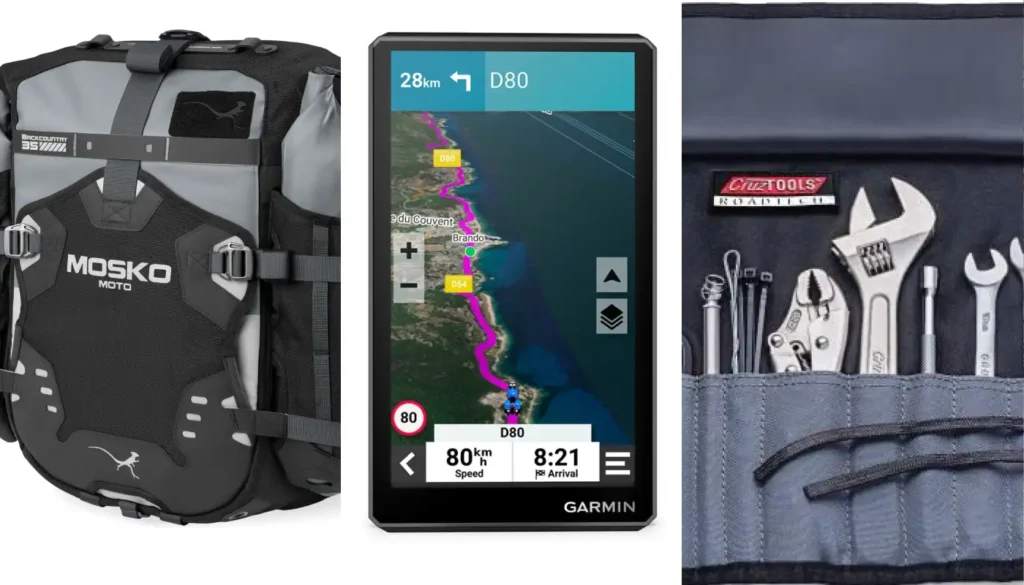
1. The Luggage: Mosko Moto Backcountry Panniers
In 2026, soft luggage has officially overtaken hard panniers for serious adventure travel. The Mosko Moto system is virtually indestructible. Unlike aluminum boxes, which can bend or snap an ankle in a tip-over, these “semi-rigid” bags absorb impacts and remain 100% waterproof through the worst storms.
2. The Navigation: Garmin Zumo XT2 + Paper Backup
Relying solely on a smartphone for a 3,000-mile tour is a mistake. Heat, vibration, and rain eventually kill phones. A dedicated GPS like the Zumo XT2 is built for the vibration of an ADV bike. Always carry a laminated paper map of your route. Tech fails; paper doesn’t.
3. The Tool Roll: CruzTOOLS RoadWorthy
Don’t rely on the “cheese-grade” tools that came under your seat. A proper roll should include:
The Daily Ritual: The “BOLTS” Check
To keep your bike healthy over 3,000 miles, perform this 2-minute check every morning before you hit the “Start” button:
The “Start New” Rule
Unless your tires have 80% tread remaining, replace them. A tire that looks “okay” at the start will be a bald, dangerous mess by mile 2,500.
Adventure Bike Touring Prep: People Also Ask
How far in advance should I prepare my adventure bike for a long tour?
Ideally, start preparing at least 2–3 weeks before departure to allow time for repairs, parts, and test rides.
What bolts should I check before a long adventure ride?
Focus on axle nuts, brake calipers, handlebar clamps, engine mounts, luggage racks, and skid plate fasteners.
Which fluids should be replaced before a 3,000-mile tour?
Engine oil, brake fluid, coolant, and chain lubricant should all be checked and replaced if nearing service intervals.
What tires are best for a long adventure bike tour?
Choose tires that match your terrain, typically 50/50 or 70/30 ADV tires, with enough tread life to last the full trip.
Should I carry spare parts on a long adventure tour?
Yes. Common spares include tubes or tire plugs, chain lube, spare bolts, fuses, and basic tools.
Final Verdict: Preparation is Freedom
The secret to enjoying a 3,000-mile tour isn’t having the most expensive bike; it’s having the most trusted bike. When you know your bolts are torqued, your fluids are fresh, and your tires are new, the “mental load” of riding disappears. You stop worrying about the machine and start connecting with the world around you.
Take the time in the garage now, so you don’t have to spend time on the shoulder of a highway later.