Motorcycle safety gear is undergoing its biggest revolution since the introduction of CE-rated armor. In 2026, riders are no longer choosing only between thicker padding or lighter jackets — they’re deciding whether intelligent electronic airbags should replace traditional protection altogether.
Brands like Alpinestars and Dainese have pushed wearable safety technology into the mainstream with electronically triggered airbag systems designed to deploy in milliseconds during crashes. Using accelerometers, gyroscopes, and AI crash-detection algorithms refined through racing environments such as MotoGP, modern airbag gear promises dramatically improved protection for the chest, spine, collarbones, and neck.
Electronic Airbags vs. Traditional Armor: 2026 Motorcycle Safety.
In the not-so-distant past, motorcycle safety was a simple, “passive” affair. You wore a heavy leather jacket, slid some plastic pucks into your shoulders and elbows, and hoped for the best. Today, the landscape of rider protection has shifted from the “passive” to the “proactive.” We are living in the age of the electronic airbag—the “Iron Man” effect for everyday riders.
The Old Guard: Why Traditional Armor Isn’t Going Anywhere
Before we dive into the world of gyroscopes and algorithms, we have to talk about “passive” protection—your standard CE-rated armor.
Passive armor—the pads you find in your jacket’s elbows, shoulders, and back—has one massive advantage: It never needs a firmware update. It doesn’t have a battery. It doesn’t care if you forgot to charge it the night before. If you crash, it works.
Traditional armor is, and will remain, the bedrock of motorcycle safety. An airbag is an addition to this system, not a replacement for it.
The Digital Revolution: Tech-Air vs. D-Air
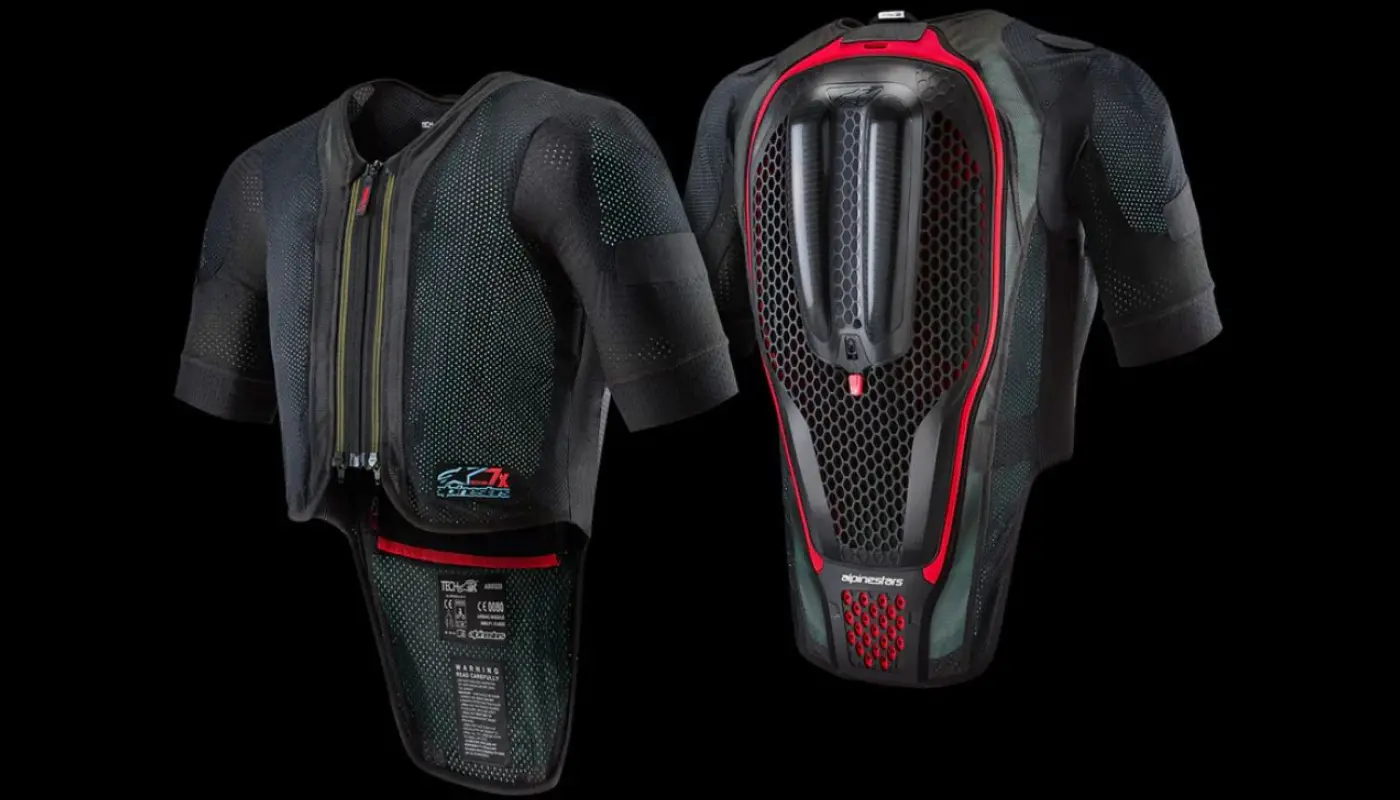
If passive armor is the shield, electronic airbags are the active defense. Systems like Alpinestars Tech-Air® and Dainese D-Air® are built on the same principle: a sophisticated array of sensors—accelerometers, gyroscopes, and sometimes GPS—that monitor your movement a thousand times per second.
When the computer detects the “physics of a crash”—usually a high-side or a sudden deceleration that defies the laws of normal riding—the system deploys an airbag in 20 to 50 milliseconds. That is faster than the blink of an eye.
The “Subscription” Controversy
This is where the room gets quiet. The most significant tension in 2026 isn’t about if these bags work—they absolutely do—it’s about how you pay for them. Some systems, notably those utilizing the In&motion platform (found in gear from Klim, Held, RST, etc.), popularized the “lease/subscription” model. You buy the vest, but to activate the “brain” (the electronics box), you have to pay a monthly or yearly fee.
- The “Pro”: On the flip side, the subscription model lowers the initial barrier to entry. Instead of dropping $1,000+ at once, you pay a lower entry fee and a subscription that keeps your software updated with the latest crash algorithms.
Note: Most systems, including Alpinestars’ dedicated line, allow you to purchase the system outright, avoiding the subscription model entirely. If you’re “subscription-averse,” the market has responded—you have options.
Comparing the Titans: Tech-Air vs. D-Air vs. Traditional Armor
| Feature | Traditional Armor | Alpinestars Tech-Air | Dainese D-Air |
|---|---|---|---|
| Type | Passive (Always On) | Active (Electronic) | Active (Electronic) |
| Activation | N/A (Impact only) | Pre-impact | Pre-impact | Battery Needed | No | Yes (25–30 hrs) | Yes (10–20 hrs) | Maintenance | None (Inspect pads) | Recharge / Servicing | Recharge / Servicing | Coverage | Elbows, Shoulders, Back | Chest, Ribs, Shoulders, Back | Chest, Back, Neck (model dep.) | Subscription | None | Optional/Buy-outright | Generally Buy-outright | Technology Level | Low | High | High | Subscription | None | Optional/Buy-outright | Generally Buy-outright | Crash Prevention Capability | None | Predictive deployment | Predictive deployment | Ease of Use | Very simple | Easy (wear + charge) | Very easy (integrated jacket) | Versatility | Any jacket | Works under most jackets | Often brand-specific jackets | Upgrade Path | Replace armor inserts | Firmware + new models | Limited upgrades (ecosystem-based) | Track Use | Limited protection | Widely used | Strong MotoGP heritage | Reliability | Extremely reliable | High but battery-dependent | High but service-dependent | Failure Risk | Very low | Battery / electronics risk | Electronics + servicing risk |
The Gear Section: Building Your Safety Ecosystem
1. The Base: CE Level 2 Armor
Even if you wear an airbag, keep the armor in your jacket. If your airbag deploys, it helps stabilize your torso; if it doesn’t deploy (or if you are hit by a low-speed impact that doesn’t trigger the sensors), that elbow and shoulder armor is still there doing its job.
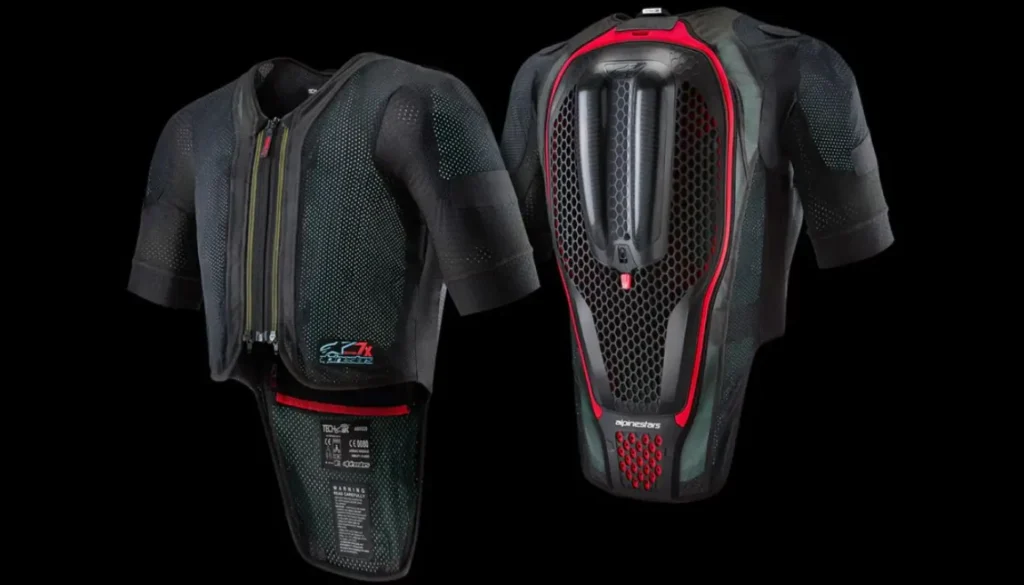
2. The Tech: Alpinestars Tech-Air 3 V2
For the everyday rider, the Tech-Air 3 is a solid choice. It’s light, fits over or under your jacket, and is completely autonomous. You can buy it, own it, and charge it like your phone. It avoids the subscription model entirely, which solves the “Iron Man” anxiety for most of us.
3. The Suit: Dainese Smart Airbag (Standalone)
Dainese’s “Smart Air” vest is a marvel of simplicity. It’s designed to be worn under your gear and is incredibly unobtrusive. It’s perfect for the rider who wants protection that disappears the moment you start moving.
Electronic Airbags vs. Traditional Armor: People Also Ask
Are electronic motorcycle airbags safer than traditional armor?
Generally, yes in high-impact crashes. Airbags absorb energy across a larger area and protect vulnerable zones like the neck and collarbones that armor alone cannot fully cover.
Why do some airbag systems require subscriptions?
Certain systems charge subscription fees for software activation, crash detection algorithms, firmware updates, or cloud connectivity features.
Do airbags work without a motorcycle connection?
Many modern systems are autonomous and rely on onboard sensors rather than bike sensors, meaning they can work on any motorcycle.
What happens after an airbag deploys?
Most systems require cartridge replacement or professional servicing before reuse. Some models allow user replacement, while others must be sent to the manufacturer.
Is traditional CE armor becoming obsolete?
Not entirely. High-quality CE Level 2 armor still offers excellent abrasion and impact protection and remains popular for commuting and budget-friendly setups.
Final Verdict
Electronic airbag technology represents one of the most significant advancements in rider safety ever introduced. In serious crashes, airbags provide levels of upper-body protection that traditional armor simply cannot match.
However, the 2026 reality is more complex. Subscription costs, servicing logistics, and electronic dependency raise legitimate concerns for long-distance tourers and budget-conscious riders. For track riders, aggressive road riders, and long-distance adventurers, airbags are increasingly becoming the gold standard. For commuters or casual riders, high-quality traditional armor still offers strong value without ongoing costs.
Airbags are the future of motorcycle safety — but ownership models, not technology, will decide how quickly riders fully embrace them.