When you’re standing in a showroom, eyes locked on a gleaming new adventure bike or cruiser, it’s easy to get distracted by horsepower figures, TFT displays, and paint schemes. But if you’re planning on keeping that motorcycle for the next five years or the next 50,000 miles there is one mechanical choice that will impact your life more than any other: How the power gets to the rear wheel.
In 2026, the debate between Chain, Shaft, and Belt drive has evolved. Technology has made chains stronger, shafts more complex, and belts more durable.
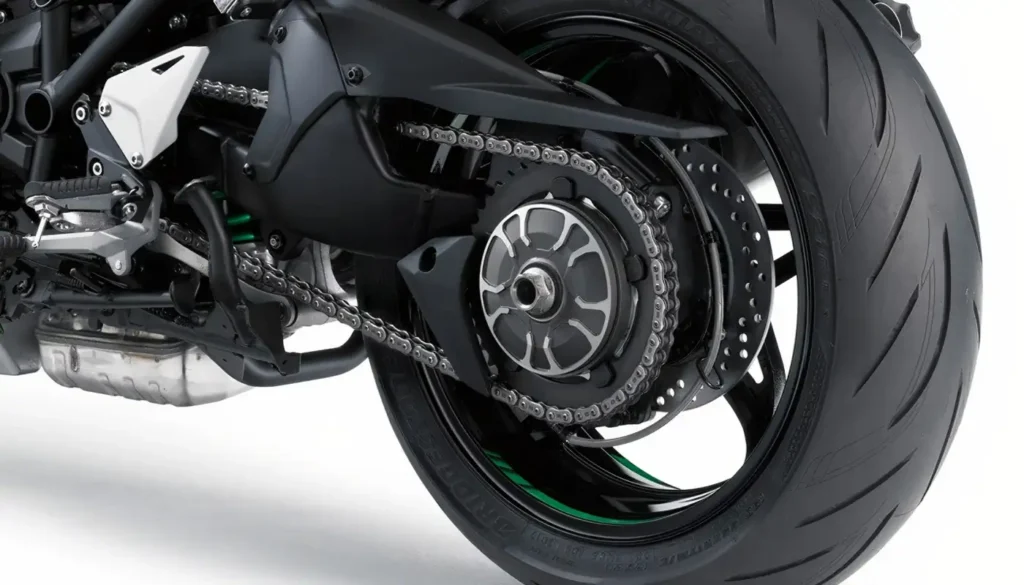
1. Chain Drive: The High-Performance Athlete
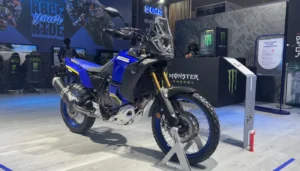
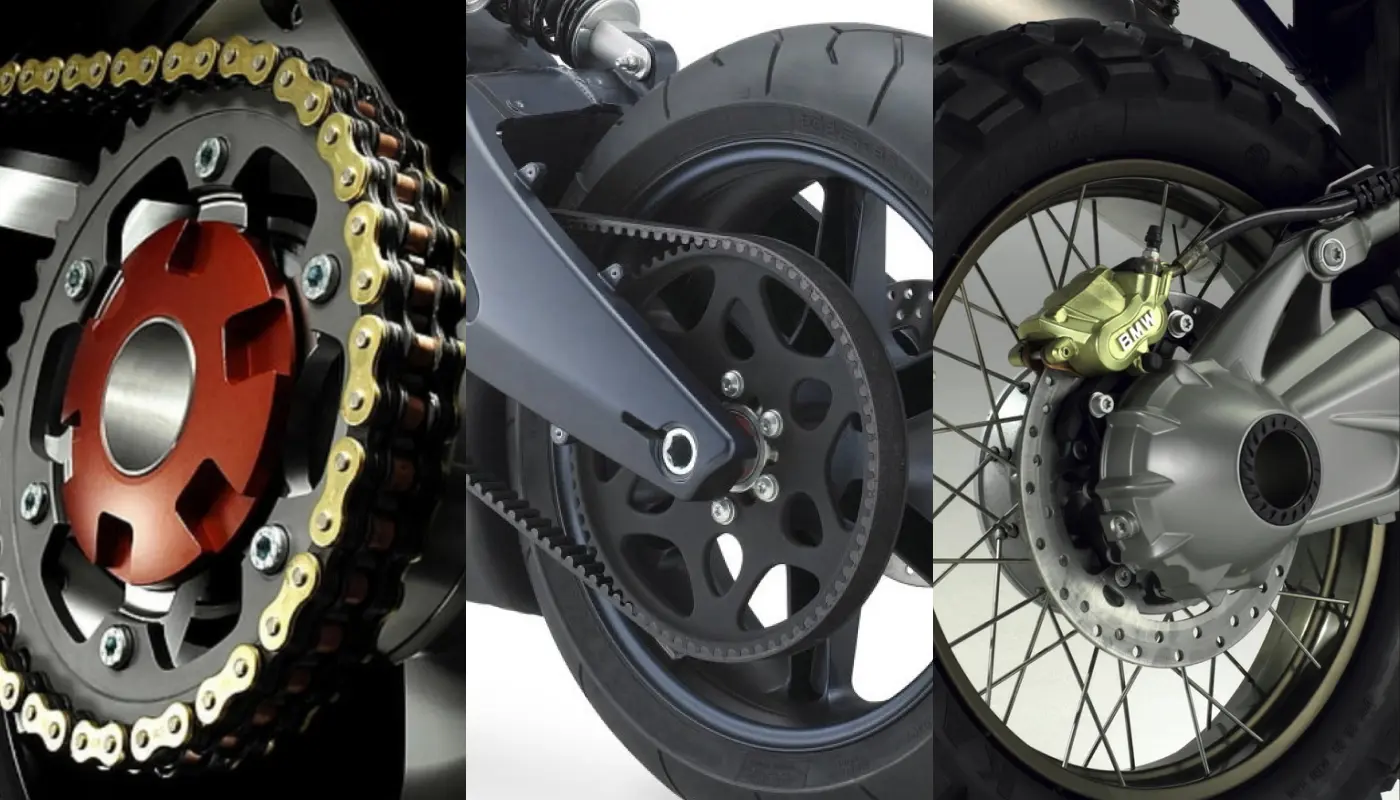
The chain is the most common final drive for a reason: it is light, efficient, and cheap to manufacture. Most middleweight adventure bikes, like the Yamaha Ténéré 700 or the Honda Transalp, rely on a chain to keep weight down and agility up.
The Maintenance Reality
Longevity and Cost
A well-maintained O-ring or X-ring chain can last 15,000 to 20,000 miles. However, ignore it, and it can be dead in 5,000.
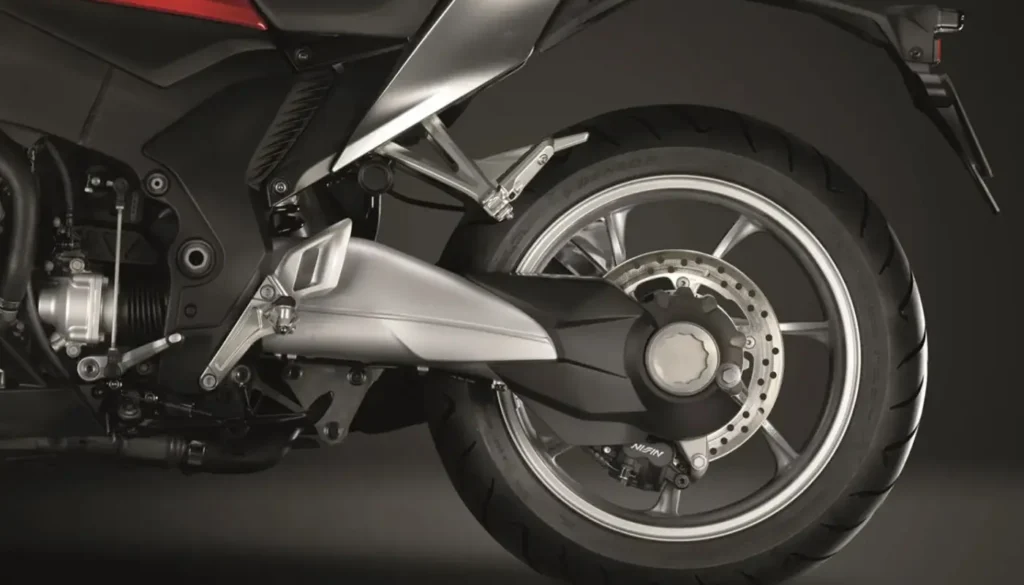
2. Shaft Drive: The Long-Distance Specialist
The shaft drive is the hallmark of the “Mega-ADV” and luxury tourers, most famously found on the BMW R1300GS and the Triumph Tiger 1200. It uses a spinning rod inside a sealed swingarm to transfer power through bevel gears.
Longevity and Cost
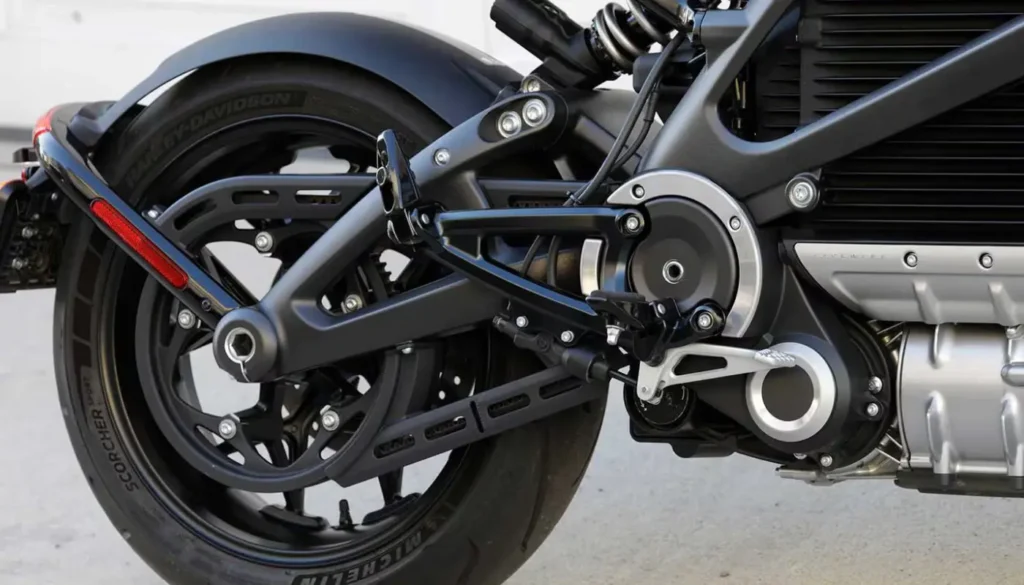
3. Belt Drive: The Silent Commuter
Commonly found on cruisers (Harley-Davidson) and some road-biased middleweights (like the BMW F-series or Zero electric bikes), the belt drive is the “set it and forget it” middle ground.
The Maintenance Reality
Longevity and Cost
Modern belts are reinforced with carbon fiber and can easily last 30,000 to 50,000 miles.
Chain, Shaft, and Belt Drives: Full Comparison
| Feature | Chain Drive | Shaft Drive | Belt Drive |
|---|---|---|---|
| How It Works | Chain and sprockets transfer power from engine to rear wheel | Shaft and gears transmit power internally through a driveshaft | A toothed belt transfers power from front to rear pulley |
| Maintenance Level | High — frequent cleaning, lubrication, tension checks | Low to Medium — periodic U‑joint/gear oil checks | Low — occasional inspection; no lubrication required | Weight | Lightest overall | Heaviest due to shaft assembly | Lighter than shaft, heavier than chain | Noise Level | Moderate | Quietest | Very quiet | Range / Fuel Economy | Good | Slightly less efficient vs chain | Good efficiency | Best Use Cases | Sport/adventure riding, racing, serious off‑road | Long adventure touring, highway cruising | Commuting, sport‑touring, light adventure | Pros | Best performance | Lowest maintenance | Quiet & smooth | Cons | Requires regular care | Heavy | Belt debris sensitivity | Example Bikes | Adventure: KTM 790/890/1090/1290, Honda CRF, Suzuki V‑Strom | ADV/Touring: BMW R1200/1250GS, Honda Gold Wing | Harley‑Davidson Sport‑Glide, some Yamaha/Triumph touring |
The Gear Section: Tools for Every Drive Type
1. For the Chain Rider: The “Grease Ninja”
If you have a chain, you need a Tirox 360 Degree Chain Brush. It clips over the chain and cleans all four sides at once, cutting your cleaning time in half. Pair this with a high-quality “dry” wax like Maxima Chain Wax to prevent road grime from sticking to your links.
2. For the Shaft Rider: Moly Paste
If you do your own maintenance, you need Honda Moly 60 or a similar high-molybdenum paste. When you pull the rear wheel off, you must grease the “splines” (the teeth that connect the wheel to the drive). Without this, the metal-on-metal friction will eventually strip the teeth, leading to a very expensive repair.
3. For the Belt Rider: A Tension Gauge
Belts are sensitive to tension. If it’s too tight, it ruins the bearings; too loose, and it “skips” teeth. A Krikit Tension Gauge is a tiny, pocket-sized tool that ensures your belt is at the factory-spec poundage.
The 50,000-Mile Cost Comparison
Let’s look at the “True Cost” of ownership over a 50,000-mile (80,000 km) lifespan.
Maintenance Tips for Long-Term Owners
Chain vs. Shaft vs. Belt Drive: People Also Ask
Which motorcycle drive system lasts the longest?
Shaft drives typically last the longest with minimal maintenance, but chains can also achieve high mileage with proper care.
Is a shaft drive motorcycle maintenance-free?
No. While lower maintenance than chains, shaft drives still require periodic oil changes and inspections.
Are belt drives more reliable than chains?
Belt drives are clean and low-maintenance but can be vulnerable to debris damage in harsh off-road conditions.
Which drive system is cheapest over time?
Chains are usually cheaper upfront but require more frequent replacement. Shaft drives cost more initially but may reduce routine maintenance expenses.
What is best for long-distance touring—chain, shaft, or belt?
Many touring riders prefer shaft drive for its low maintenance, though chains remain popular due to lighter weight and efficiency.
Final Verdict: Which is Best for You?
In 2026, the Chain remains the king for the middleweight adventure rider. The ability to repair it anywhere in the world and the low replacement cost make it the “safe” bet for explorers.
However, if your “Handmade Ride” consists of 90% tarmac and 10% well-graded dirt, the Shaft drive on a premium ADV is a luxury that is hard to give up once you’ve experienced it.
The Belt remains the niche choice—perfect for the urban scrambler or the long-distance cruiser rider who values quietude above all else.