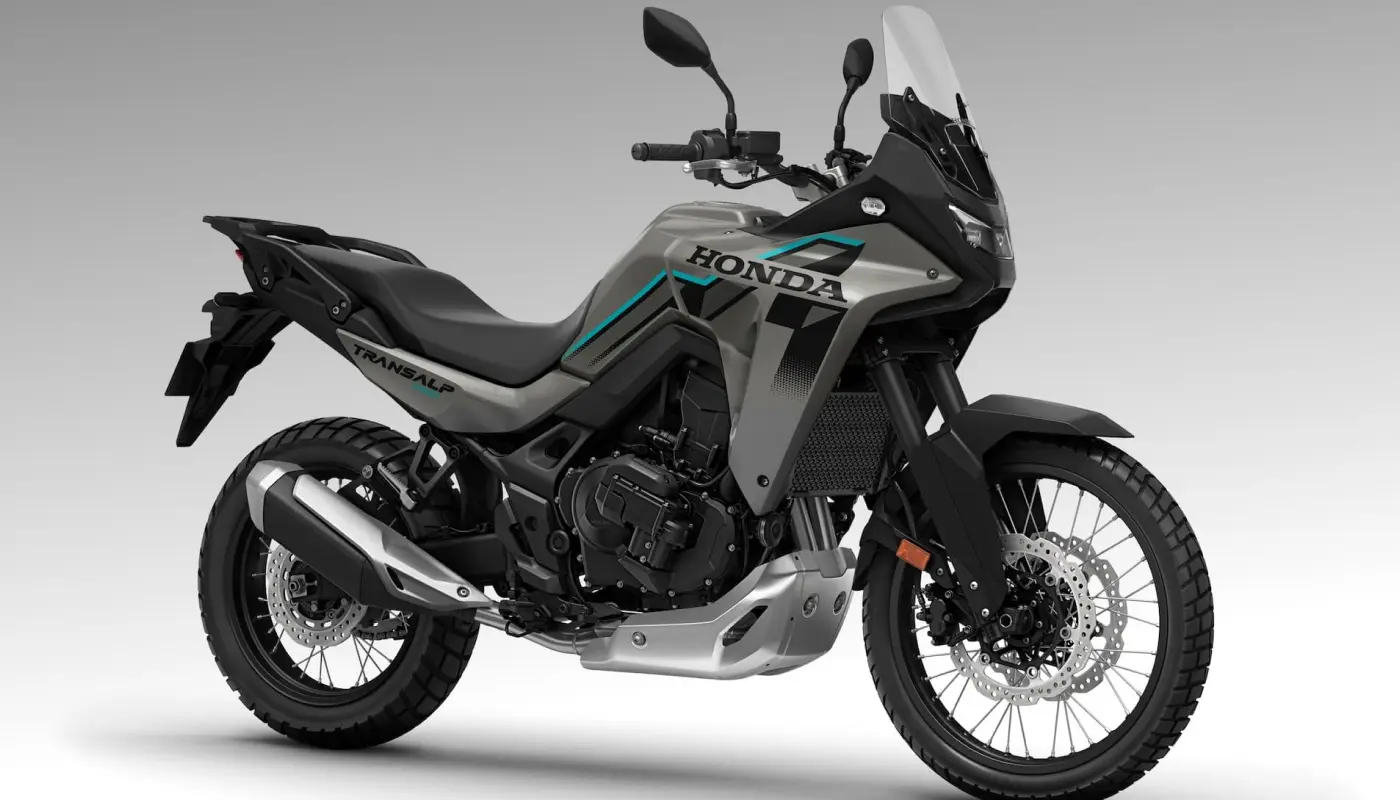
The return of the Honda XL750 Transalp to the global stage in recent years has been one of the most significant moments for the adventure motorcycling community. For decades, the Transalp name stood for a specific kind of reliability: it wasn’t the flashiest bike in the parking lot, but it was the one most likely to still be running when the odometer hit six figures.
Honda XL750 Transalp: The Return of a Legendary Adventure Bike
In 2026, the XL750 Transalp continues this legacy, but with a modern twist. It is no longer just a “sensible” choice; it is a high-performance middleweight that bridges the gap between a daily commuter and a serious continent-crosser. If you are looking for a machine that balances Honda’s legendary build quality with a surprisingly punchy engine, the Transalp is a contender that demands your attention.
In this article, we take a closer look at the Honda XL750 Transalp, examining its performance, adventure-ready features, and why it’s quickly becoming a favorite among riders seeking a reliable, lightweight, and affordable adventure motorcycle.
The Heart of the Alps: The 755cc Unicam Engine
When Honda announced they were moving away from the traditional V-twin for the new Transalp, purists were skeptical. However, the 755cc parallel-twin has silenced the critics. It is the same powerplant found in the CB750 Hornet, but it has been specifically re-mapped for adventure duties.
Efficiency for the Long Haul
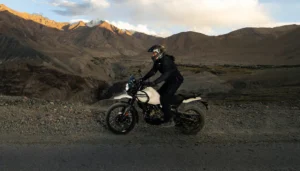
For many travelers, the most impressive “spec” isn’t horsepower—it’s range. The XL750 is remarkably fuel-efficient. Even with its modest 4.5 US Gallon (16.9L) tank, riders are consistently seeing ranges of over 210 miles (340 km), which is crucial when exploring regions where the next fuel stop is a question mark.
Honda XL750 Transalp (2026) – Full Specifications
| Specification | Details |
|---|---|
| Engine Type | Liquid-cooled, 4-stroke, SOHC, 8-valve parallel twin |
| Displacement | 755 cc |
| Bore x Stroke | 87.0 mm × 63.5 mm |
| Max Power | 90–91.8 hp @ 9,500 rpm |
| Max Torque | 55 lb-ft (75 Nm) @ 7,250 rpm |
| Top Speed | 120 mph (195 km/h) |
| 0–60 mph | 3.8–4.2 sec (est.) |
| Transmission | 6-speed manual |
| Clutch | Wet multi-plate assist & slipper clutch |
| Final Drive | Chain |
| Quickshifter | Optional (market dependent) |
| Front Suspension | Showa 43 mm USD forks (200 mm travel) |
| Rear Suspension | Pro-Link monoshock (190 mm travel) |
| Front Brakes | Dual 310 mm discs, 2-piston calipers |
| Rear Brake | 256 mm single disc |
| ABS | Dual-channel with off-road mode |
| Wheels | Spoked (21” front / 18” rear) |
| Wet Weight | 463 lbs (210 kg) |
| Seat Height | 33.5 inches (850 mm) |
| Wheelbase | 61.4 inches (1,560 mm) |
| Fuel Tank Capacity | 4.5 gallons (16.9 L) |
| Fuel Consumption | 55 mpg (4.3 L/100 km) |
| Estimated Range | 230–250 miles |
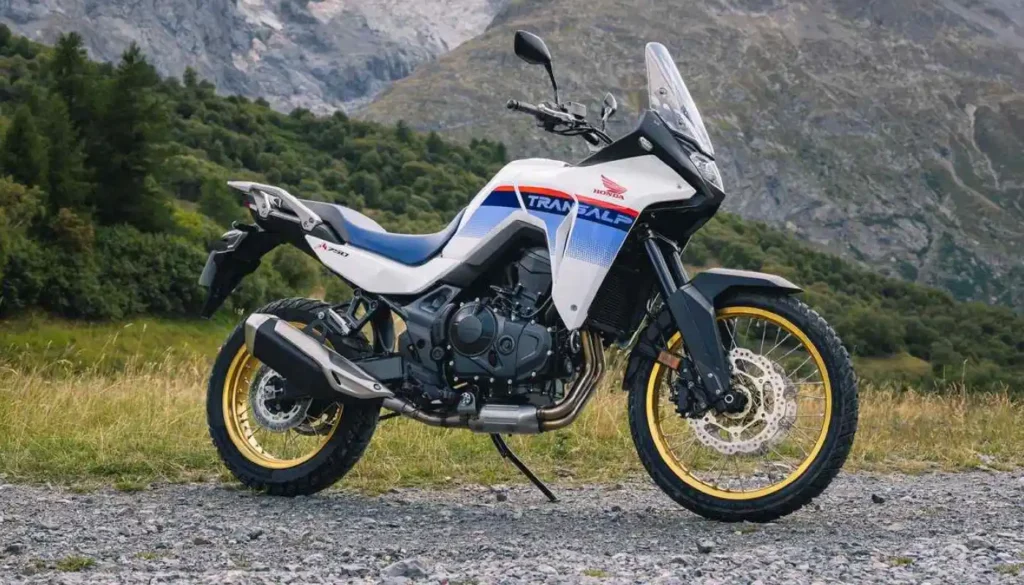
2026 Comparison: Middleweight Versatility
| Feature | Honda XL750 Transalp | Yamaha Ténéré 700 | Suzuki V-Strom 800DE |
|---|---|---|---|
| Engine | 755cc Parallel-Twin | 689cc Parallel-Twin | 776cc Parallel-Twin |
| Horsepower | 90.5 HP | 73.4 HP | 83 HP |
| Weight (Wet) | 459 lbs (208 kg) | 452 lbs (205 kg) | 507 lbs (230 kg) |
| Electronics | 5 Modes, TC, EB | Basic ABS | Modes, TC, Quickshifter |
| Wheel Setup | 21″ F / 18″ R | 21″ F / 18″ R | 21″ F / 17″ R |
| MSRP (Approx.) | $9,999 / £9,600 | $10,799 / £10,100 | $11,599 / £10,700 |
Gear Guide: Equipping for the Transalp Journey
TBecause the Transalp is so versatile, your gear needs to be able to transition from a high-speed motorway to a dusty trail without skipping a beat.
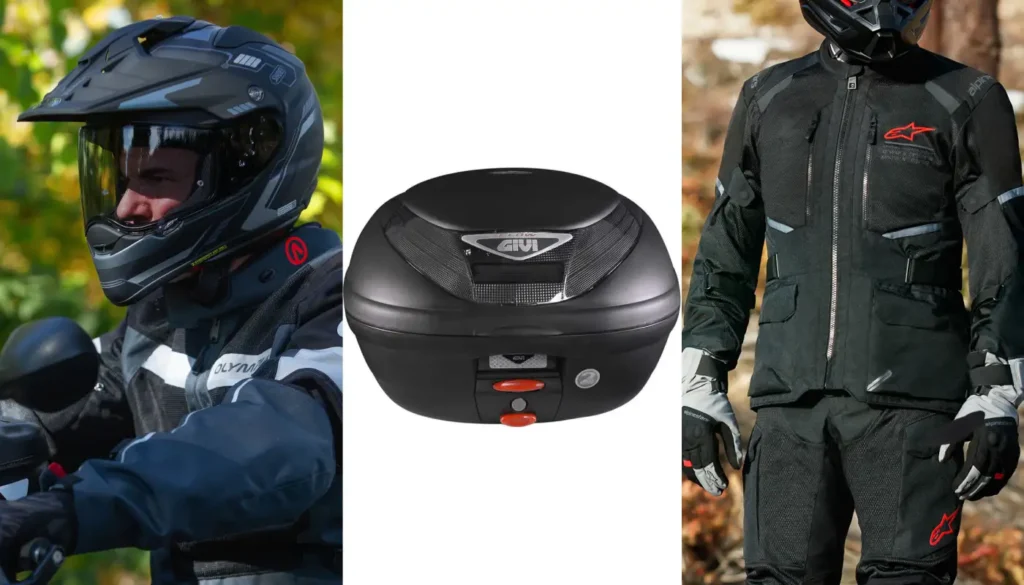
1. The Helmet: Shoei Hornet X2
The Hornet X2 is the perfect match for the Transalp’s “all-road” mission. It is aerodynamically stable at highway speeds (where many ADV helmets “pull” at your neck) but offers enough airflow and a peak for off-road excursions. It is a premium lid for a rider who values quietness on long tours.
2. The Suit: Alpinestars Andes v3 Drystar
Much like the Transalp itself, the Andes v3 suit offers incredible value. It provides a waterproof “Drystar” membrane and a removable thermal liner. It’s a “four-season” setup that doesn’t break the bank, allowing you to spend more of your budget on fuel and tires.
3. Protective Hard Parts: The “Must-Haves”
If you plan on taking your Transalp into the dirt, there are two accessories you should install before your first trip:
The “Friendliness” Factor
What the spec sheet doesn’t tell you about the Honda XL750 is how approachable it is.
Maintenance: The “Honda Promise”
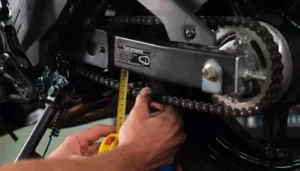
Ownership of a Transalp is famously stress-free.
Honda XL750 Transalp: People Also Ask
Is the Honda XL750 Transalp good for off-road riding?
Yes, it features a 21-inch front wheel, long-travel suspension, and off-road riding modes, making it well-suited for dirt and gravel riding.
How does the XL750 Transalp compare to other middleweight ADV bikes?
The Transalp stands out for its lightweight design, Honda reliability, and excellent balance between on-road comfort and off-road capability.
Is the Honda XL750 Transalp suitable for long-distance touring?
Absolutely. Its comfortable seating position, efficient engine, and smooth power delivery make it ideal for long rides.
What kind of rider is the Honda XL750 Transalp best for?
It’s perfect for riders who want a versatile, easy-to-ride adventure motorcycle that performs well both on pavement and off-road.
Is the Honda XL750 Transalp beginner-friendly?
While it’s manageable and balanced, it’s best suited for riders with some experience due to its height and adventure-focused setup.
Final Verdict
The Honda XL750 Transalp/ is the “Goldilocks” of the adventure world. It isn’t the most powerful, nor is it the lightest, but it is “just right” for the vast majority of riders. It is a bike that allows you to commute to work on Monday and leave for a 2,000-mile trip on Friday without changing a thing.
In a market full of high-strung, expensive “super-ADVs,” the Transalp is a refreshing reminder that a motorcycle should be a tool for exploration—reliable, capable, and, most importantly, fun.