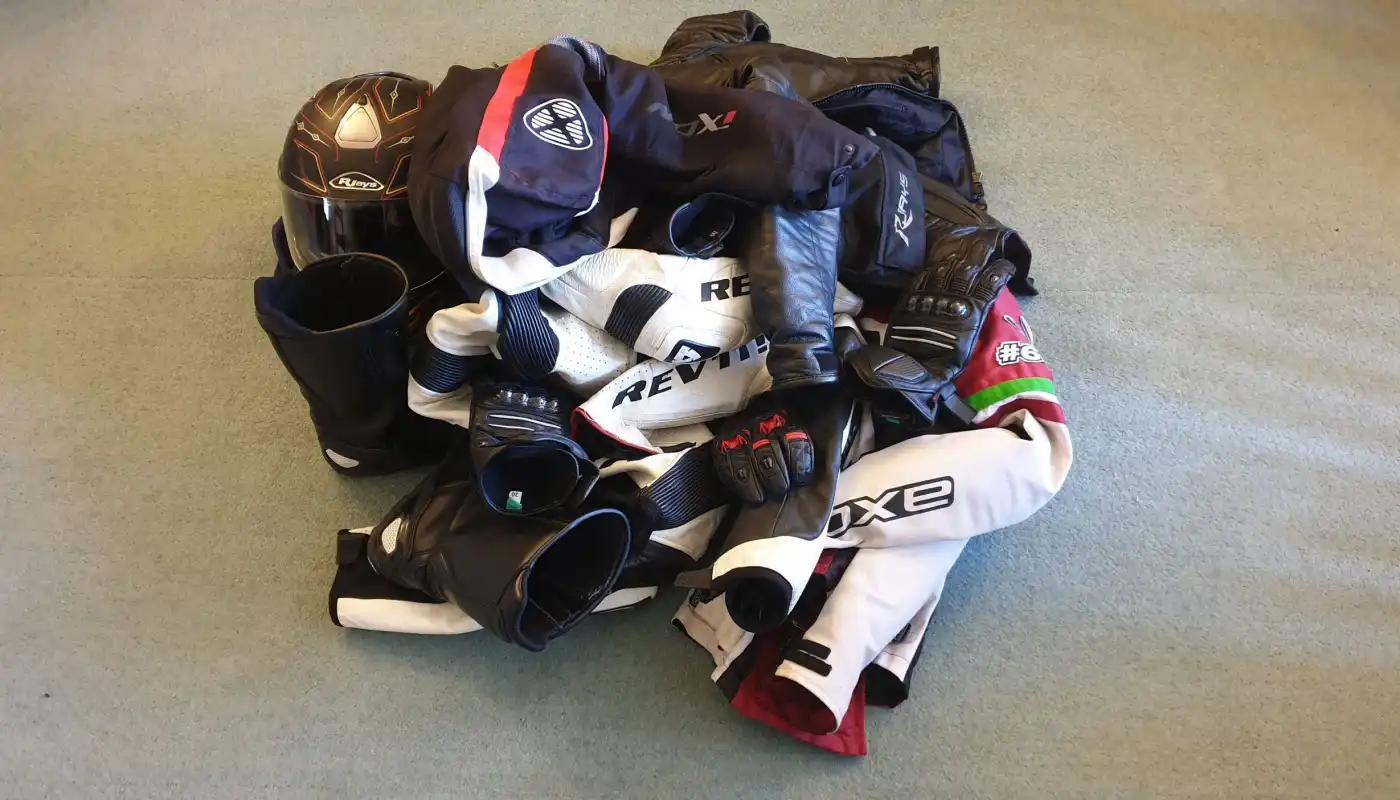
ATGATT stands for “All The Gear, All The Time”, a safety principle that encourages riders to wear proper protective equipment every time they ride, no matter how short the trip. For beginners, this doesn’t mean buying the most expensive gear—it means choosing the right equipment that offers real protection, comfort, and practicality.
In this beginner’s guide to motorcycle gear, we break down what you actually need to ride safely, explain why each piece matters, and help you build a smart gear setup without overspending. Whether you’re commuting, learning to ride, or planning your first long trip, this guide will set you up the right way from day one.
Motorcycle Gear for Beginners: What You Actually Need (ATGATT).
When you’re a beginner, the sheer volume of gear options can be overwhelming. To make it simple, we break your protection down into five essential categories.
1. The Helmet: Your Most Important Investment
In almost every corner of the globe, a helmet is a legal requirement, but for a rider, it’s a life-support system. In 2026, the gold standard is the ECE 22.06 certification. This newer, stricter European standard ensures the helmet can handle impacts at multiple angles and speeds.
2. The Jacket: Your Second Skin
A good motorcycle jacket serves two purposes: impact protection and abrasion resistance.
3. Gloves: Protecting Your Tools
Human instinct is to put your hands out when you fall. Even at 15 mph, the friction against asphalt will shred skin to the bone in seconds.
4. Pants: More Than Just Jeans
Standard denim lasts approximately 0.4 seconds in a slide at 30 mph. Dedicated riding pants use Kevlar or Dyneema linings to survive the friction.
5. Boots: Ankle Support is Non-Negotiable
A high-top sneaker is not a motorcycle boot. In a tip-over, the most common injury is a crushed or twisted ankle.
2026 Gear Comparison: Beginner Setup vs. Advanced Setup
| Category | The “Daily Commuter” (Value) | The “Adventure Explorer” (Premium) |
|---|---|---|
| Helmet | HJC i71 (Polycarbonate) | Shoei Hornet X2 (Fiberglass Composite) |
| Jacket | Rev’It Eclipse 2 Mesh | Klim Badlands Pro (GORE-TEX) |
| Gloves | Alpinestars Copper | Held Sambia (Kangaroo Leather) |
| Pants | Bull-it Tactical Jeans | Revit Sand 4 H2O |
| Boots | TCX Street 3 Sneakerss | Sidi Adventure 2 GORE-TEXs |
| Total Est. | $750 – $900 | $1,800 – $2,500 |
The Gear Section: What the Pros Wear in 2026
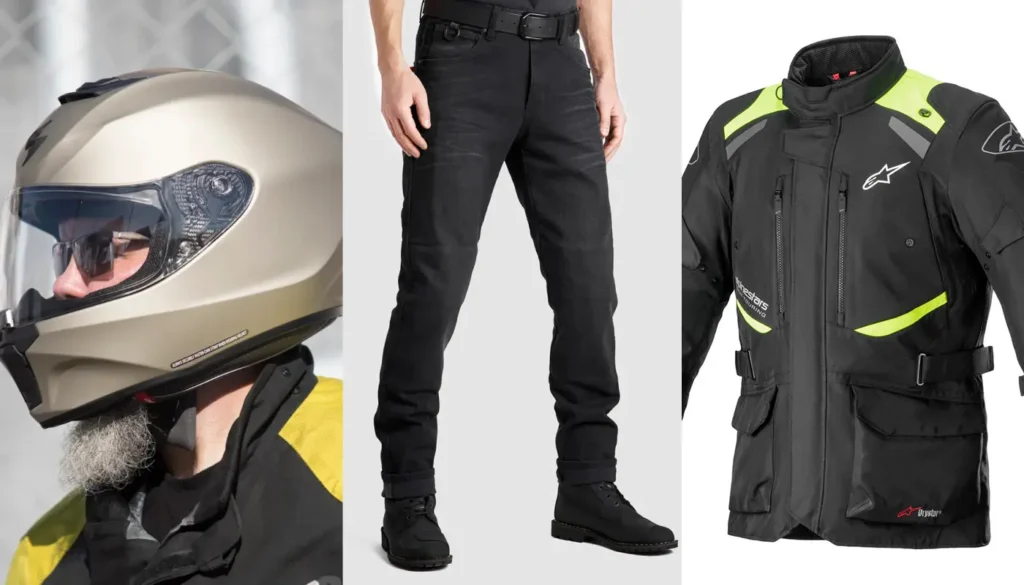
The “Safe-Bet” Helmet: Scorpion EXO-R420
For under $200, this helmet punches way above its weight. It features an emergency release system for the cheek pads—something usually found on $600 racing lids—allowing paramedics to remove the helmet safely in an accident.
The Do-It-All Jacket: Alpinestars Andes v3
This jacket is a favorite for a reason. It is waterproof, has a removable thermal liner, and includes high-quality armor. It’s a “four-season” solution that works whether you’re riding in a cool morning fog or a warm afternoon sun.
The Discreet Protection: Pando Moto Boss Dyn Jeans
These are for the rider who wants to go from the bike to the office. They are Cordura-reinforced and come with CE-rated knee armor that is so slim you can’t even see it.
Why “Cheap” Gear is a Myth
Gear is an investment in your health.
Common Beginner Mistakes
Maintenance: Caring for Your Second Skin
Proper care can double the life of your gear.
Beginner Motorcycle Gear (ATGATT): People Also Ask
Q: What does ATGATT mean in motorcycling?
ATGATT stands for “All The Gear, All The Time,” meaning riders should always wear full protective gear whenever they ride.
Q: What is the most important piece of motorcycle gear for beginners?
A certified helmet is the most critical piece of motorcycle safety gear, followed closely by gloves and protective jackets.
Q: Do beginner riders need expensive motorcycle gear?
No. Beginners should focus on certified, well-fitting gear rather than high-end or race-focused equipment.
Q: Can I ride short distances without full motorcycle gear?
It’s not recommended. Most accidents happen close to home, which is why ATGATT is strongly advised.
Q: Is motorcycle gear different for men and women?
Yes. Many brands offer gender-specific gear designed for better fit, comfort, and protection.
Final Verdict: The Freedom of Being Prepared
The irony of motorcycle gear is that the more of it you wear, the freer you feel. When you know you are protected by a high-quality helmet, a reinforced jacket, and sturdy boots, your brain stops worrying about “what if” and starts focusing on the “right now.”
Motorcycling is one of the most rewarding experiences a human can have. Do it right, do it safely, and you’ll be riding for decades to come.